Vines On The Mary Crest
Columbia Crest
Two Vines California Cabernet Sauvignon 2015

Drinkable on a budget. — 5 years ago

Columbia Crest
Two Vines Unoaked Washington State Chardonnay 2011
I normally prefer wines more on a dry side, this one is quite sweet, but it’s “nice sweet”, very fruity and full in taste. Love it! — 8 years ago
Columbia Crest
Two Vines Washington State Riesling 2015
Love this wine. It's a new favorite. First had it in an Italian restaurant on lake Conroe — 9 years ago
Vines on the Mary Crest
Buck's Boogie Paso Robles Red Blend

Nice dessert wine. — 9 years ago
Saxum Vineyards
Heart Stone Vineyard Syrah Blend 2010

On the the nose, grilled meats, soy, mint, menthol, black currants, dry blackberries, blue fruits, black plum, dark spice and decayed dark florals. The mouthfeel is full, rich, ripe that starts juicy and slowly dries across the palate. Fruits are the much like the nose. There's a good presence of tarriness, deep-dark Asian-Indian spices, dry stems, leather, pepper, wood shavings, menthol, mint & herbaceousness. Then, the fruits start to differentiate themselves on the longer plate set; blackberries, dark cherries, black plum, black raspberries, blueberries, mocha powder, caramel, crushed dry rocks, graphite, soy, grilled meats, dry decayed floral bouquet, violets & black cherry cola. The earth still outshines the fruits. The structure is still big. The elegant stingy finish swirls of everything above quite simultaneously on a long rich high acid finish. Still needs 5+ years. Photos of the the heart stone, vines of the "Heart Stone Vinyard" and those beautiful Paso Syrah grapes at harvest. The Heart Stone Vineyard is in the Paso Robles Adelaide AVA with a 30 acre oak forest on a hill and 8 acres planted to Rhone varietals. It was planted by John and Mary Swanson in 2000. They hired Justin Smith (Winemaker/Owner Saxum Winery) to select the property and plant the vineyard. He agreed on the condition he could take all the grapes. 2003 was the first vintage of Saxum Heart Stone. The high density blocks are planted on gentle South slopes of limestone and shale. It has 8 different clones of Syrah, 5 of Grenache and 2 Mourvedre. — 9 years ago

Paul T, Missing My Beautiful Wife 24/7
We used to go to paso in the 80's as a kid, parents had friends up in cambria so we hit the midstate fair every August, stinking hot & dirt is all I remember, who knew it would become what it is today. If only pops bought some that dirt! But it was the equivalent of buying dirt in Bakersfield at the timeColumbia Crest
Two Vines Washington State Sauvignon Blanc 2013

Pomelo, salt water, oily on the nose. Light refreshing acidic on mouth — 11 years ago
Arbor Crest Wine Cellars
Dionysus Vineyard Riesling 2015

Washington Riesling is so underrated. Honeysuckle and apricots give way to pure petrol! The riesling at Dionysus was the oldest on the vineyard and really shows its 50 year anniversary of vines well! Sadly they were ripped out a few years ago — 3 years ago
Botanica
Citrusdal Mountain Chenin Blanc 2019
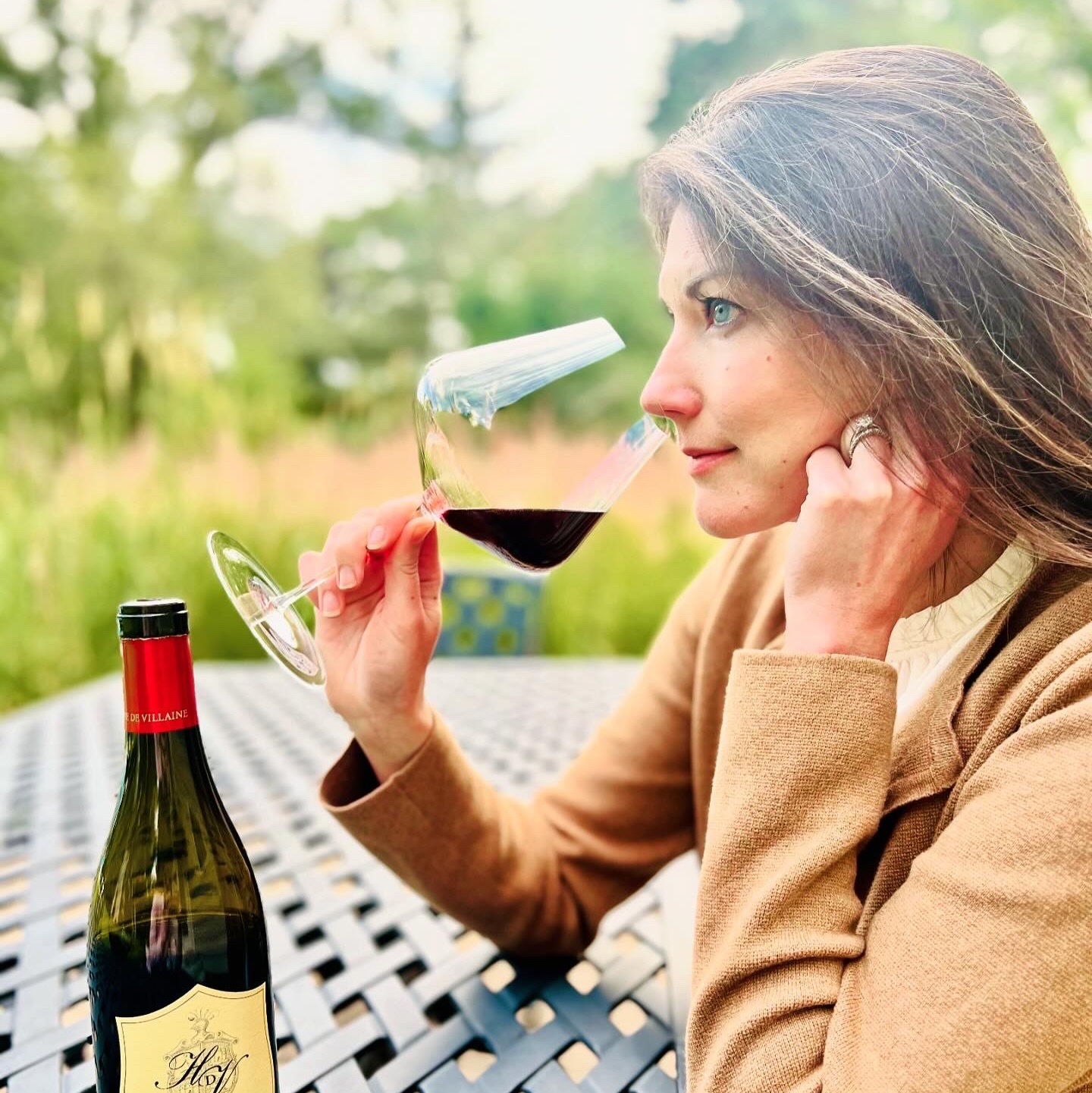
Cheers to old-vine Chenin Blanc from South Africa! 🇿🇦 In South Africa, Chenin Blanc also goes by the name “Steen.”
It’s such a versatile grape and wine, capable of producing beautiful sweet, dry, still, and sparkling wines.
This wine is still and dry. We’ve paired it with sushi and it’s a delightful duet.
The grapes for this wine were grown organically in the Citrusdal Mountain district, north of Cape Town, west of the Olifants River, on the Western Cape. The bush vines were originally planted in 1957 (old!!), contributing to an intensity and a concentration of primary aromas and flavors in the grapes.
Indeed, the nose and palate offer medium(+) aromas and flavors of ripe pear, yellow apple, white peach, vegetal, boxwood, white blossom, crushed stone, and aged cheese rind notes. Lively acidity gives it lift and balances the high alcohol and intensity of fruit.
This wine was produced by Ginny Povall, American-born proprietor and self-taught winemaker of Botanica Wines. I love the botanical images on her labels, each an homage to the flower farm on which she began her wine production journey in South Africa.
Botanica Wines, Chenin Blanc (Mary Delany Collection), 2019, ABV 14%. — 4 years ago

Seavey Vineyard
Estate Grown Cabernet Sauvignon 2013
The nose reveals; dark currants, blackberries, heavy black plum, black raspberries, dark cherries and some blueberries. Black tea, expresso roast, anise, crushed dry rocks, big vanilla, clove, a little nutmeg, dry underbrush, sweet tarry notes, leather, woody notes with dark fresh & withering flower bouquet.
The body is big and lush. The tannins are big, meaty and tarry. Very dark currants. Blackberries, heavy black plum, black raspberries, dark cherries and some blueberries & strawberries as they open up. Black tea, expresso roast, steeped fruit tea, anise, crushed dry rocks, dry clay, big graphite, big vanilla, dark spice, clove, light dry herbs, a little nutmeg, dry underbrush, sweet tarry notes, leather, cedar with violets dark fresh & withering flower bouquet. The acidity is round, fresh and beautiful. The big, long, well balanced finish is excellent and look forward to having this in 15-20 years. This one will be a stunner!
Photos of, the barn where they make wine and hosts tastings, our private tasting area inside William’s old office. William desk and their outside terrace area.
Producer history & notes...Seavey Vineyard is located along Conn Valley Road in the eastern hills of Napa Valley, about 15 minutes from the valley floor.
This historical property was originally a cattle ranch. However, records indicate grapes were planted on some of the hillsides as early as the 1870’s. The stone dairy barn, still in existence, was built in 1881.
William & Mary Seavey purchased this property in 1979. The estate was originally founded by the Franco-Swiss Farming Company in 1881 which, closed down when Phylloxera destroyed their grape vines and the Volstead Act (Prohibition) went into effect. At the time of their purchase, they were a horse and cattle ranch. They quickly planted the slopes with grapes and initially sold their fruit to Raymond Vineyards. They have never purchased grapes, all their wine is made from estate grapes. Their vineyards are separated into 20 plus individual blocks.
Today, the property is about 200 total acres of which, 40 acres are planted to vine. Their hillside vineyards produce low yields of rich concentrated fruit. A small block of Chardonnay grows in a cooler lower part of their property. Besides grapes, they also raise cattle which are used to graze the hillsides. They feed the vineyard with the cattle cuttings. In 2003, they were one of the first Napa wineries to install solar.
Mary passed away in 2008 and William died in 2016. There daughter Dorie returned to the family business and now oversees the winery operations. Her brother Arthur also handles national and some small international sales, primarily to restaurants. However, most of their wine is sold direct to consumers.
Seavey’s first commercial vintage was released in 1990 a year after they renovated the stone dairy barn into a working winery. Today this stone building is the centerpiece of the property and is where tastings are hosted.
Since 2011, Jim Duane has been their day to day Winemaker. He’s worked at Robert Mondavi and Stag’s Leap Wine Cellars. It should also be noted that Philippe Melka Winemaker/Consultant has been with Seavey since 1995...one of Philippe’s two initial wine making jobs in the Napa Valley were with Seavey and Lail Vineyards.
Seavy makes about 3,200 cases annually depending on what mother nature brings. They make around two hundred cases of Chardonnay, slightly more Merlot and the rest is of the production is comprised of their Caravina and Estate Cabernets.
— 8 years ago

Vines on the Mary Crest
Paso Robles Malbec 2013

Cassis, strawberry and gooseberry. Nice bold one. Great with a lamb steak. — 10 years ago
Vines on the Mary Crest
Satin Doll Paso Robles Red Blend 2013

Minty, rich and very concentrated — 11 years ago
Columbia Crest
Two Vines Washington State Gewürztraminer 2011

Sweet oak, apple and banana - butterscotch nose. Butter apple - wow grapefruit on the tongue. Nice. VERY nice. — 12 years ago
Vines on the Mary Crest
Syrah 2020

Fruity aroma, inky opaque purple hue, rich dark jammy fruit flavors of plum and blackberry and moderately low tannins. Delicious. — 3 years ago
Vines on the Mary Crest
So What Red Blend 2019
Fruity aroma, opaque purple hue, fruit forward with low tannins with dark fruit flavors of blackberry and plum. Delicious. — 3 years ago
Vines on the Mary Crest
Paso Robles Primitivo 2015

Big bear 2018
Tart with vibes of cherry — 6 years ago
Columbia Crest
Two Vines Columbia Valley Merlot - Cabernet 2014

Great week night bottle. Good blend easy and smooth on the palate. Can be had by itself. — 8 years ago
Flora Springs
Trilogy Napa Valley Cabernet Sauvignon Blend 1993
They should have called the Winery Floral Springs based on the nose. Beautiful; blackberry, black raspberries, dark cherries, strawberries, dry cranberries and plum floral fruits. Nice spice, vanilla, touch of clove & cinnamon, used leather, dark rich soil, crushed volcanic minerals, black fruit tea, black raspberry cola and dark fresh florals with violets. The tannins are 95% resolved. The body is lush & ripe. The length, tension & structure are nearing the end. Just a few years left of being worthwhile. However, the balance is stereo tuned. The fruit on the palate shows even more elegant & ripe floral fruits than the nose. Blackberry, black raspberries, dark cherries, strawberries, dry cranberries and plum floral fruits. Nice spice, vanilla, light clove & cinnamon, used leather, dark rich soil, crushed volcanic minerals, black fruit tea, black raspberry cola and dark fresh florals with violets for days. The acidity is like a waterfall. The beautiful, long, elegant finish is a little lean yet has a nice richness. Beautiful wine that just missed 9.2. Photos top to bottom and left to right. The Winery; which is separate from the other tasting room only on Hwy 29. The tasting room on Hwy 29 in St. Helena, Flora Spring caves and the front of their tasting room along Hwy 29. Producer notes and history...the stone winery on the grounds were built in 1885 by two immigrant brothers from Scotland, James and William Rennie. They were in construction, built the winery and planted 60 acres of grapes. The brothers had some bad fortune when phylloxera consumed the vines, and then a fire in 1900 destroyed their wine press and cooperage. In 1904, they sold the winery and fifteen years later Prohibition started. The winery was then closed until 1933. That year, Louis Martini, looked into their magic eight-ball and saw Prohibition collapsing and bought the Rennie property. They built a new stone house and also made a reserve wine from the hillside vineyards. However, the old winery remained empty until the Komes family bought the property, 325 acres, the old farm house, the newer stone house and 60 acres of vineyards. The son thought he’d persuade his dad to restore the old winery and proposed to call it Chateau Jerome. Although it had been designed by Hamden McIntyre an architect of several other classic 19th-century Napa wineries, by 1977, the place was a wreck. The tin roof of the building had so many holes in it. They called it the starlight roof. His father looked at it and stated, “I’ve worked all my life for my good name. I don’t want to squander it now.” John’s mother, Flora, however, sided with her son on the potential of the property. Carrie Komes suggested they could name the winery for her mother-in-law. Combined with the abundant springs on the land, they decided the name would be Flora Springs. It was a sure way to their mom’s heart and father’s wallet. Komes put his construction expertise to work on renovating the old winery, which still had scorch marks on the walls. So skeptical was his father about his son’s wine-making project, they divided the winery building. John rented half where he put his first fermenting tank, which he named R2D2. He invited a couple of friends from his wine-making class to help make wine at the new place. He also hired Mary Ann Graf, who in 1965 had been the first woman to graduate from the viticulture and enology department at UC Davis to help manage the project. She told John, “if you don’t hire a winemaker, I’ll quit.” He did and the 1979 Flora Springs chardonnay won a gold medal at the Los Angeles County Fair. In those days, it was fairs, not ratings. This was his first lesson in marketing as they sadly sold all the wine before they won the medal. Fairs were the big news instead of ratings as Parker had not yet risen to fame as he was the only one to call the grand 1982 Bordeaux vintage correctly. They submitted their 1981 Cabernet to eight fairs and won seven gold medals. From there, the winery just kept growing. They were the 67th winery in the county. Over the years, they had their ups and downs, but kept growing. One of their highlights was the creation this wine, Trilogy. It was one of the first Meritage blends in the valley. By 1984, they planted all the Bordeaux varietals; Malbec, Merlot, Cab Franc, Cabernet Sauvignon and Petit Verdot. They wanted to create a blend “by taste”, not by formula for a nice smooth wine that goes deep into the palate. They worked with a little of this and little of that. The first Trilogy was Cabernet Sauvignon, Merlot and Cab Franc. It was dubbed as velvet in the mouth. A lot of what they do is taming the tannins. One man who bought Trilogy by the case said, “it’s the only red wine his wife would drink young.” From the leftovers, they began making single-varietal estate wines. Another highlight was the discovery of a unique clone of Sauvignon Blanc in vineyards his father bought in Oakville. UC Davis could identify nothing like it in their vast library of clones. They were a bit ahead of the times, but this clone showed Flora Springs how different in that time period what Sauvignon Blanc could be like as it took all the grassiness out of Sauvignon Blanc. — 9 years ago




Sipping Fine Wine
A tribute to the crest called Rattlesnake Hill, highest point of Monte Rosso Vineyard, famous for rattlesnakes living among the vines, seeking sunshine by day and coiling around the vines at night. Dark Ruby with aromas of berry fruits, tangy herb, pepper and sweet spice. On the palate flavors of blackberry and ripe cherry with black pepper spice, vanilla and earthy sweet herbs. Soft chewy tannins, medium+ finish ending with fruit, spice and earthy oak. Nice! — 2 years ago