Housley's Century Oak Winery
Château Pontet-Canet
Pauillac Red Bordeaux Blend 1999


Black cherry and plum tart emerging through aromas of violets dotting brown breads, shiitake and black oak. Cinnamon, cedar and clove coalesce. Raspberry reduction with currants. Hints of mints. Tart cherry palate brings cherry reduction and black currants, tons of dark cedar wrapped cigar, tart blackberry, peppercorn and cinnamon stick. Green notes suggest this is still young and half-blossomed despite the quarter century. Grainy tannins, though rounded.
#pontetcanet #chateaupontetcanet #pauillac #appellationpauillaccontrôlée #1999 #1999bordeaux #bordeaux #misenbouteilleauchâteau #leftbank #leftbankbordeaux #bordeauxrouge #grandcruclasséen1855 — 3 years ago


Château Smith Haut Lafitte
Le Petit Haut Lafitte Red Bordeaux Blend 2018
Estate dates back to Crusades & Scottish navigator, George Smith, owner in the 18th century. Blend of 60% Cabernet Sauvignon and 40% Merlot aged in 20% new oak, deep Ruby with aromas of dark berry, herbs and earthy spice. On the palate flavors of plum, cherry & currant with notes of pepper, tobacco & cacao notes. Soft rich full tannins, long finish ending with fruit, earthy and mineral character, needs a little more time. — 4 years ago
Château Capbern-Gasqueton
Saint-Estèphe Red Bordeaux Blend 2009

Great value at $50.00 from K&L
Web notes,
The owner of this Chateau, Calon Segur takes some of it name Calon from the word 'calones' which were small transport skiffs that used to haul goods up and down the Gironde river. Back then boats were the best mode of conveyancing wine plus preferable to the reluctant donkey and other landlubbing transports. This fact is a big reason for this region's long successful trading history. Much to the dismay of more land locked wine making regions, Bordeaux enjoyed direct access to the water. Happily shipping great wines such as Chateau Capburn Gasqueton for centuries. As this red wine was transported away from the port, the owners would farewell it's strawberry and raspberry driven fruit flavours bound for distant thirsty lands. It's beautiful chalky tannins and fine oak would be missed as they were well on the way to our store's shelves, cellars and tummies. Hence raise a big cheers to the diminutive but very essential Calons! (And amazing value Bordeaux reds)
Chateau Capburn Gasqueton is situated in St Estephe, on the left bank of Bordeaux, France. Grapes have been grown on the property's grounds since the 12th century. However, the 18th century saw it's elevation into quality wine production when Nicolas-Alexandre, owner of Latour, Lafite and Mouton bought the Chateau along with Chateau Calon Segur. From 1894 to 2012 the Gasqueton family owned the Chateau - producing wines of great finesse and elegance. In 2013 the French insurance company Suravenir bought Chateau. Since then they have heavily invested in upgrading the estate whilst ensuring they preserve this historic and treasured wine producer. Its vineyard comprises of 62% Cabernet, 37% Merlot and a petite drop of 1% Petite Verdot! — 4 years ago

Paul T, Missing My Beautiful Wife 24/7
The things you can find when you copy & paste 🤷🏼♂️Château Grand-Puy-Lacoste
Pauillac Red Bordeaux Blend 2017
Family history dates back to the 16th century. Name of Grand-Puy, mentioned in documents from Middle Ages, comes from ancient term "puy" means "hillock, small height". Since 16th century, property was passed from generation to generation, until 1920s when the Borie's bought the property. 80% Cab Sauv, 80% new oak, aromas of ripe red fruits with floral spice. Palate shows blackberry and cherry fruit, well balanced, nice oak integration, chewy tannins ending with spicy mineral tones. — 5 years ago
Tenuta Il Poggione
Brunello di Montalcino Sangiovese 2012
Founded at end of 1800 when Lavinio Franceschi, Florence land owner, visited the area. Over a century later, Tenuta covers an area of 530 hectares (140 planted with vines; 50 with olive trees). Aged in French oak for 36 months, 100% Sangiovese hand picked from 20-year old vines. A Gem! Deep Ruby. rich berry fruit aromas with complex spice. Palate has rich berry fruit flavors, baked cherry, with tobacco, cacao & subtle spice. Soft tannins, long finish ending with seductive earthy tones. Nice, aged well! — 6 years ago
Molino Real
Mountain Wine Málaga Moscatel 2016
Before phylloxera wiped out its vineyards, Málaga was considered one of Europe’s greatest wine regions and its legendary “mountain wines” were coveted throughout the world. In his memoirs, Hugh Johnson singled out an 1830s “mountain wine” bought at a Christie’s auction under the label Molino del Rey as the best wine he’d ever drank - and he’s had plenty. Taking its inspiration from Johnson’s account, Telmo Rodríguez’s Molino Real represents a groundbreaking effort to revive Málaga’s winemaking traditions and to explore the region’s potential for top quality sweet wines.
A “vino naturalmente dulce” or naturally sweet wine (not to be confused with Málaga’s also famous “vino dulce natural” a fortified style developed later in the 18th Century), Molino Real is made with Muscat of Alexandria grapes from 9 hectares of vines on steep slate slopes in Cómpeta in the Axarquía region. The grapes were sun dried - a process known as asoleo - to increase sugar concentration, fermented in 225-liter oak barrels and then aged for 20 months.
Sumptuous, exuberant nose. Flowers, orange blossom, and peach (actually peach yogurt). Balanced, not overwhelmingly sweet. Delicious! — 6 years ago
Housley's Century Oak Winery
Judy's Vineyard Cabernet Sauvignon

Deep pomegranate red mild nose sweet and mellow — 7 months ago
Château de Lamarque
Marquis d'Evry Red Bordeaux Blend 2021

Château de Lamarque “Héritiers des Marquis d’Evry” 2021
Haut-Médoc, Bordeaux, France 🇫🇷
Overview
This vintage is a classic Bordeaux blend—Cabernet Sauvignon, Merlot, Cabernet Franc, and Petit Verdot—sourced from a historic Haut-Médoc château with roots stretching back to the 15th century. It’s the “second wine” of Château de Lamarque, offering approachability while retaining estate quality. The appellation’s gravelly terroir and structured style are evident in every sip.
 
Aromas & Flavors
Rippling with blackcurrant and cassis, the wine is wreathed in cedar, tobacco, and earthy undertones. On the palate, dense fruit and toast meld with a hint of spice—classic left-bank elegance with that savory Médoc streak.
 
Mouthfeel
Medium to full-bodied with refined tannins and vibrant acidity. A balanced structure makes it satisfying now, while promising graceful evolution over the next 5–10 years.
 
Winemaking Notes
The estate cultivates a blend of vines: roughly 45% Cabernet Sauvignon, 35% Merlot, 15% Cabernet Franc, and 5% Petit Verdot. Fermentation occurs in hidden concrete vats, followed by aging—with about 25% in new French oak barrels.
 
Food Pairing
Perfectly paired with robust fare: beef steaks, roast lamb, silverside, game, and dishes enveloped in rich, savory sauces.

Verdict
A solid Haut-Médoc “second wine” that mirrors the terroir and tradition of Château de Lamarque at a more accessible level—classic, savory, and beautifully balanced. Cheers!
— a year ago
Vignobles Brunier ( Frédéric & Daniel Brunier )
Clos La Roquète Châteauneuf-du-Pape White Rhône Blend 2020
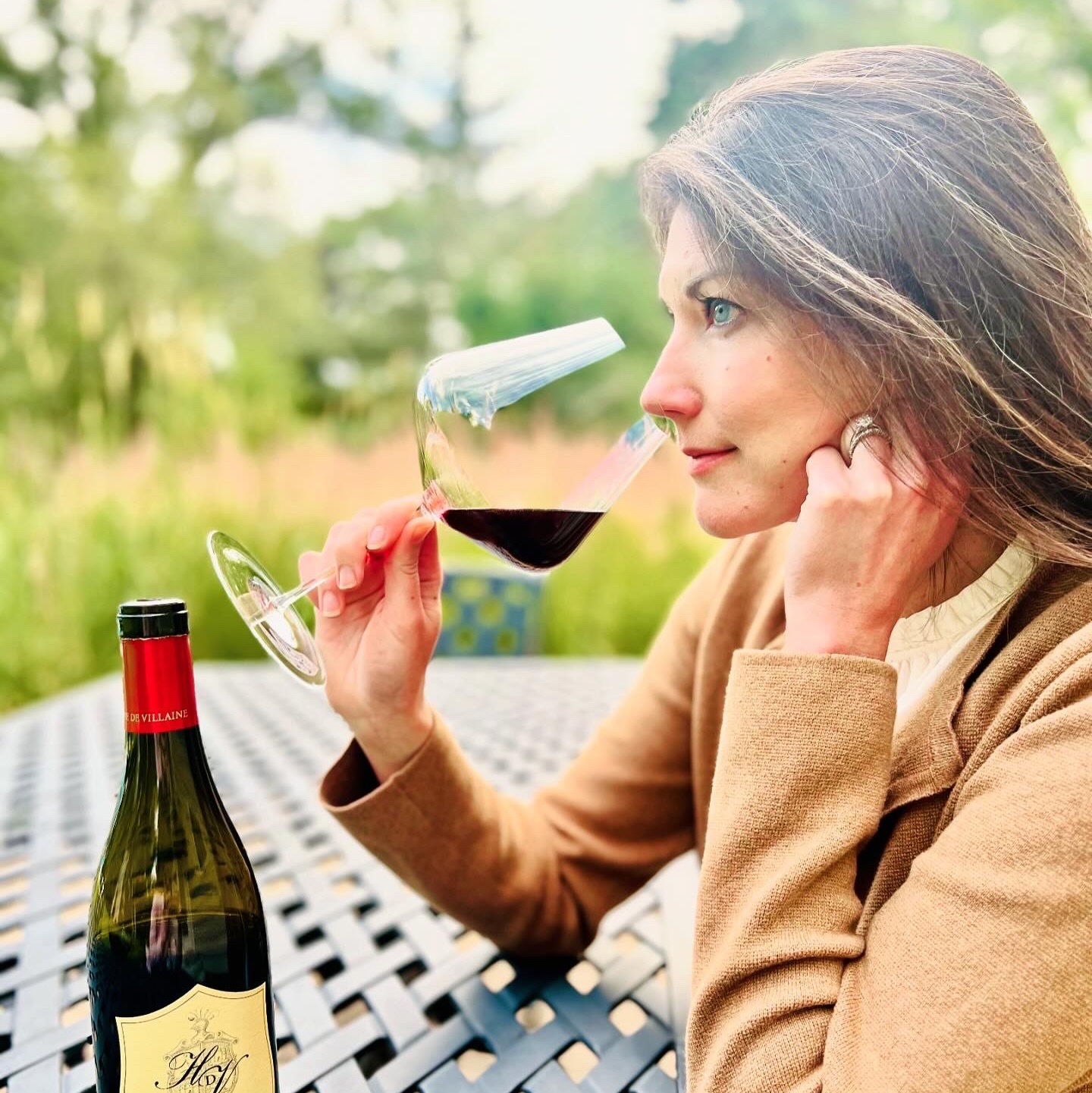
Clos Roquète is a white Châteauneuf-du-Pape wine produced by Frédéric & Daniel Brunier of Domaine du Vieux Télégraphe with a fascinating history to tell…
Châteauneuf-du-Pape (CNdP) is a highly-esteemed commune located in the Southern Rhône of France. It gets its name, “new castle of the Pope,” because the Pope spent his summers there in the 14th Century when the papacy was relocated to nearby Avignon.
This wine is made from 35% Clairette, 35% Roussanne, and 30% Grenache Blanc (all local, white varieties), each adding a unique aromatic and structural dimension. It was aged 11 months in oak prior to release, lending richness and texture.
Despite its rich, creaminess, it also has aromatic lift with notes of lemon peel, ripe cantaloupe, white peach, apricot, next to notes of white blossom, vanilla, honey, fennel, and petrichor (a fancy word for the smell of warm, wet pavement like after a summer rain).
We’re excited to pair this with a lemon, garlic, and herb roasted shrimp over spiralized zucchini noodles.
Cheers to beautiful wines that tell stories and share histories! — 4 years ago

Marchesi Antinori
Tignanello Toscana Super Tuscan Blend 2017
The Antinori family of Florence, one of the world's oldest and most distinguished wine producers, has lived in Tuscany since the 14th century. Blend of 80% Sangiovese, 15% Cab Sauv & 5% Cab Franc. Deep Ruby, aromas of black berry fruit aromas with herb, mint and sweet spice. On the palate flavors of blackberry and cherry with cacao, vanilla and aromatic spice. Fine graceful tannins, long finish, well balanced, savory ending with oak and juicy earthy mineral tones. Very Nice! — 4 years ago
Stags' Leap Winery
Napa Valley Cabernet Sauvignon 2018
Mid 20th century fashionable country resort, popular with Hollywood due to 1892 stone Manor House & historic gardens. Blend of 81% Cab Sauv, 11% Merlot, 4% Malbec, rest other Rhone varieties, aged 20 months in 37% new French oak. Dark Ruby, aromas of ripe berry fruits, herbs & spice. On the palate flavors of black cherry & black currant with vanilla oak and earthy notes. Well balanced, fine tannins long finish ending with fruit, espresso notes and sweet spice! Nice now and will drink well over next decade. — 4 years ago
Cesca Vicent
Cabaler Priorat Maccabeu - Garnatxa Blanca 2015
One of the oldest vineyards in Priorat, dating as far back as the 15th century. A blend of 55% Macabeu and 45% White Grenache, aged 4 months in French oak, pale lemon with beautiful aromas stone fruits, herbs and floral notes. On the palate flavors of ripe apple, apricot and citrus with notes of cedar and vanilla. Long finish, lively acidity, great mouthfeel, ending with fruit, mineral and vanilla spice. Very nice! — 5 years ago
Château Clos de Sarpe
Saint-Émilion Red Bordeaux Blend 2000
Football & Steak 🥩 wine. Didn’t realize this winery goes back almost 100 years. I see some 1937 out there still.
Parker 96.
Even at 20 years old it needs a 2nd day 3 hour decant.
Parkers review,
189, The Wine Advocate
Readers who require immediate gratification will dislike this wine, which is one of the most concentrated behemoths and tannic blockbusters of the vintage. This is very much in keeping with the proprietor’s intention to make wines such as they made in the 19th century, and ones that can last 50+ years. Still young, with plenty of noticeable new oak, this 2000 tastes like a 3 to 4-year old St.-Emilion. Plenty of barbecue smoke, graphite, blackberry, and plum characteristics are present in both the aromatics and flavors of this broodingly backward, massive monster. While fascinating, it is not for everybody. I originally gauged its maturity to be around 2010, but I would push that back to 2015-2040+. — 6 years ago
Paul T, Missing My Beautiful Wife 24/7
I like Brady just because he gave New England a big 👎🏼
Binyamina
The Cave Cabernet Sauvignon Blend 2020
The Cave – Red Blend – 2020
Galilee, Israel 🇮🇱
Overview
A powerful Bordeaux-inspired blend composed of 65% Cabernet Sauvignon, 26% Merlot, and 9% Petit Verdot, sourced from high-elevation vineyards in the Upper Galilee. Aged 24 months in French oak inside the historic Carmel Mountain cave, a naturally cool, humidity-stable cellar that shapes the wine’s depth and structure. Mevushal / Kosher for Passover.
Aromas & Flavors
Dark mulberries, black plum, and blackberry compote meet cedar, mahogany wood, espresso, and subtle graphite. The Petit Verdot adds an herbal-floral edge, giving the wine both muscle and nuance.
Mouthfeel
Full-bodied with firm, assertive tannins and a deep, wood-toned intensity. Concentrated, layered, and long, with an oaky spine that lingers on the finish.
Food Pairings
Braised lamb shoulder, smoky short ribs, aged Gouda, slow-roasted brisket, or charred portobello mushrooms.
Verdict
One of Israel’s most characterful red blends, bold, structured, and cellar-worthy. The interplay of fruit density, mineral tension, and pronounced oak makes this a standout Mevushal wine for those who appreciate power and polish. Cheers!
Did You Know?
The Cave winery ages its wines in a 250-year-old man-carved cave in Carmel Mountain, originally quarried in the 18th century and repurposed in the 19th century as a brandy cellar. Its natural insulation provides ideal conditions for long élevage, giving these wines their signature depth and aging potential. — 10 months ago
Renato Ratti
Ochetti Langhe Nebbiolo 2019
Located halfway up the hill dominating the principal valley of Barolo, supported by steep slopes lined by orderly vineyards, lies the 15th century Abbey of Annunziata. Medium Ruby with aromas of ripe berry fruits with earthy herb notes, aged for 12 months on oak. On the palate flavors of cherry, strawberry and raspberry with sweet vanilla spice. Fine tannins, vivid acidity, medium+ finish ending with earthy fruit character. Good value, Barolo like without $$! — 3 years ago
Château de la Louvière
Pessac-Léognan Red Bordeaux Blend 2000
Nice 👍🏼
Dark Web info
Château La Louvière has many fascinating facets. The sumptuous architecture of the château building dates from the late 18th century, but winegrowing here goes back more than 700 years. The first vines were planted circa 1310, although modern winemaking dates from the 17th century and was handed down by able monks from the Carthusian monastery in Bordeaux, who had acquired considerable talent as viticulturists and winemakers. The people who produce the wine in the 21st century have inherited these time-honoured methods, adding just the right amount of innovation and modernity to make the utmost of the outstanding terroir. La Louvière's red wine has a dark colour and an elegant bouquet with delicate hints of oak...
— 4 years ago
Paul T, Missing My Beautiful Wife 24/7
Love my 20-25 year oldsM. Chapoutier
Monier de La Sizeranne Hermitage Viognier Blend 2016
History of Chapoutier family dates back to the early 19th century when current owner Michel Chapoutier’s great-, great-, great-grandfather Marius purchased estate & famous l’Hermitage vineyards. Medium Ruby with aromas of rich red/black fruits and spice, 16 months in 25% new French oak. On the palate raspberry, cherry & black currant flavors with notes of oak. Soft dusty tannins, well balanced ending with fruit, spice and cedar. Very nice! I wouldn’t age long, great now! — 4 years ago
Ratti
Marcenasco Barolo Nebbiolo 2015
Located halfway up the hill dominating principal valley of Barolo, lined by vineyards, lies a precious 15th century Abbey of Annunziata. Medium Ruby with complex aromas of berry fruits, oak and fresh floral scents. On the palate dried cherry, tobacco, licorice, espresso and fresh herbs give this full-body wine grace and elegance. Soft fine dusty tannins, with earthy notes, on a well balanced frame makes this hot vintage wine approachable today as well as have room to run over the next decade. Very Nice! — 4 years ago
M. Chapoutier
Monier de La Sizeranne Hermitage Syrah
History of Chapoutier family dates back to the early 19th century when current owner Michel Chapoutier’s great-, great-, great-grandfather Marius purchased estate & famous l’Hermitage vineyards. Medium Ruby with aromas of rich red/black fruits and spice. On the palate raspberry, cherry & black currant flavors with notes of oak. Firm tannins, well balanced ending with fruit, spice and cedar. Very nice! Tasting Sample. Has lots of room to bottle evolve. — 5 years ago

Sipping Fine Wine
Torres family has been related to wine since 17th century when their ancestors first planted vines in the Penedès, a winegrowing region dating to the days of the Phoenicians. Deep Ruby with aromas of jammy fruit, pepper and toasty cedar. On the palate this blend of Cariñena, Garnacha and Syrah shows black currant, jammy blackberry and pepper, vivid acidity with fine grainy tannins, long finish ending with fruit, spice, oak and earthy character. Nice. — 16 days ago