Market Vineyards
Caymus Vineyards
Napa Valley Cabernet Sauvignon 2007
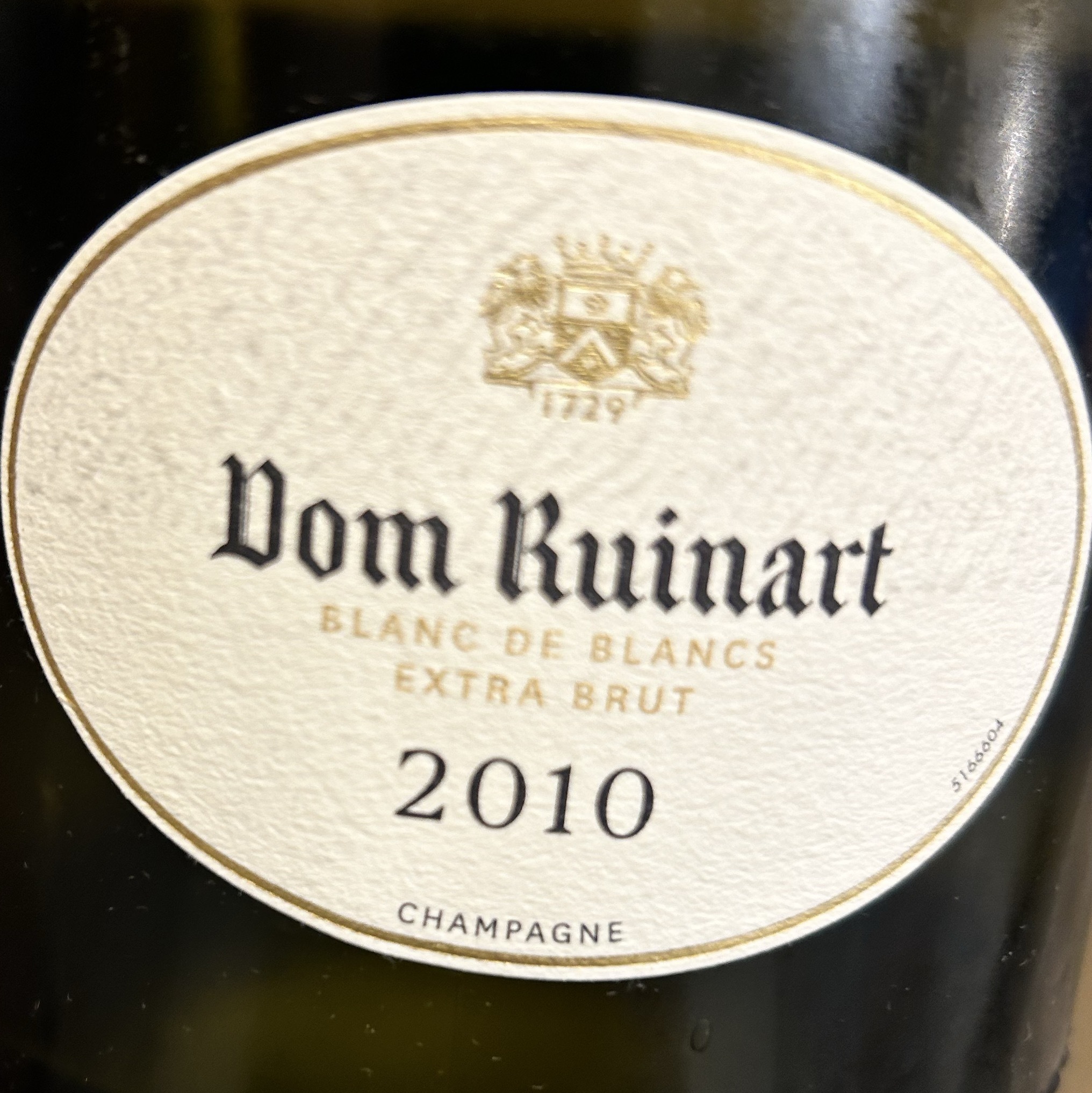

Market Vineyards
Acquisition Cabernet Sauvignon 2008

“Wine is the only art work you can drink.” Luis Fernando Olaverri
This 2008 is like drinking seductive poetry! Grapes sourced from the Red Mountain AVA. Lots of sediment to filter out and aeration opens it up. My goodness this is smooth. — 7 years ago
Renato Corino
Barbera d'Alba 2016

Tim’s Wine Market $22 — 8 years ago
Jean-Luc Colombo
Cape Bleue Rosé Blend 2017

Classic Provence style- raspberry, peach, and some lovely stoney minerality. Light, crisp and refreshing. For the price, a bottle it's hard to imagine a better South of France rosé on the market — 8 years ago
Market Vineyards
Liquidity Columbia Valley White Blend 2015
Intense floral aromas, crisp. 50% Viognier 50% Roussanne blend. — 8 years ago
Josh Cellars
Cabernet Sauvignon 2015
Wonderful wine for the price point. Dark crimson color. Dark fruit and sweet plums on the nose. Nicely balanced palate with medium tannins and lingering fruit finish. Got on sale at World Market for $8.70. Should have bought more! — 9 years ago
Caves Saint-Pierre
Le Fiacre du Pape Châteauneuf-du-Pape Red Rhone Blend 2014

Sorry for being AWOL. But I bring tidings of great joy. The 2014 is out! (So is Bogle Phantom. More later! I just kiss on the first date!) I love Le Fiacre du Pape. Hands down one of the best values -- and most under the radar -- wines on the market. Brought to me many vintages ago by Señor Haro, a formidable presence in the wine world. The 2014 has great fruit, with a nice meaty backdrop. Lots of bacon fat and mushroom. Awesome. Unlike past years a bit tannic. Needs to breathe! Always one to have on hand. — 9 years ago
Beaulieu Vineyard
Reserve Tapestry Napa Valley Cabernet Sauvignon Blend 2007
Just stupendous for $20-$25 on release. Bought this 6-8 weeks ago on the secondary market for $49.
Happy Birthday Angela. — 3 years ago

Voliero
Brunello di Montalcino Sangiovese 2012
Tim’s Wine Market. $65. — 6 years ago
Charles Heidsieck
Brut Réserve Champagne Blend
Charles "Champagne Charlie" Heidsieck was one of the first to recognize the importance of the U.S. as a Champagne market. A blend with 40% reserve wines, fruit and floral bouquet, with orange blossom & yeasty notes. Fine bubbles, nice mousse, showing quality. Outstanding rich flavors of apple, pear and biscuit, well balanced, good structure, creamy. Long finish ending with toasty nutty oak & mineral notes. — 7 years ago
Podere Brizio
Brunello di Montalcino Sangiovese 2012
Tim’s Wine Market. $68. Marc de Grazia night. — 8 years ago
Clean Slate
Mosel Riesling

Ripe peach with accents of green apple and lime juice on the nose, balanced with a Stoney minerality. No detectable petroleum here. Taste is lush fruit with juicy pear coming through. High acid and just off dry. Good value off your local market shelf. — 8 years ago
The Standish Wine Company
Single Vineyard Shiraz 2005
This is absolutely one of my top three favorite producers from Barossa. Dan Standish marches to his own drum when it comes to his Winemaking. He doesn’t follow trends or fashion in winemaking. Before he started his own Winery, he was the Winemaker for Torbreck and also traveled to other world wine regions before settling back in Barossa. I had the privilege of spending a couple of hours last April with him. What a joy to listen, learn and laugh with him. This wine comes from 100 year old vines. While it is excellent, keeps getting better and puts on weight in the glass, its just a notch under his “Relic.” He has no US importer as he sells out to his mailing list. He’ll ship it to you, but shipping charges from Australia are simply stupid. You’ll find some of his wines on the secondary market. On the nose; smoldering ambers, black plum, black raspberries, dark cherries, olallieberries, huckleberries, blueberries, loamy dry soils, crushed rocks, spice, sour dark liqueur notes, dry stones, light baking spices, dark turned earth, well done toast, dry lavender, lilacs and fresh violets. The body is rich, lush and beautiful. The tannins are about a year or two farther along than I’m used to tasting, 80% resolved. The palate is simply and flat out amazing. The fruits are; juicy, ruby, ripe and stun the senses. Black plum, plum, black raspberries, raspberries, dark cherries, olallieberries, huckleberries, boysenberries, blueberries with a mid red fruit mix haunting the background of the palate here & there. The dark medium spices are more refined than the “Relic” and have a perfect heat lifting intensifying quality off the palate. Loamy soils, black licorice, anise, cracked pepper, crushed rocks, dark turned earth, tarry notes, dry stems, an amazing blend of baking spices-clove, nutmeg & a whiff of vanilla, dry herbaceous quality, dry lavender & lilacs and fresh violets for days. Perfect round acidity, excellent; structure, length, tension and balance. Long beautiful finish that doesn’t end. This is First Growth Shiraz! Photos of his Winery and those 100 year old vines. @Paul Treadway Huntington Beacher — 9 years ago
Truly fantastic mate✌️

Jones Family Vineyard
Napa Valley Cabernet Sauvignon 2009
The follow up to the 03 Leonetti. @Paul T- Huntington Beach & I have been telling readers about older Jones Family Vineyards for some time. If you haven’t had or not tried this producer it will be the last time I try to entice to you to try this producer. Talking about it more will only drive up the prices on the secondary market.
This 09 is damn beautiful after nearly a four hour decant but it is still fairly youthful.
It is ruby, lush, gorgeous, ripe fruits of; blackberries, black raspberries, black plum with skin, dark cherries, plum, hues of purple, blue fruits & raspberries, poached strawberries, black licorice, mixed, dark berry cola, steeped black tea, dry crushed rocks, limestone minerals, dry top soil, dry herbs, hints of eucalyptus, dry clay, dry tobacco, new leather, spice, nutmeg, clove, cinnamon & vanillin, withering red & dark florals framed in violets & lavender, beautiful round acidity, beautiful; balance, tension, structured, smartly polished finished that lasts minutes.
Still needs another 5-8 years to show its best self.
The Jones Family vineyard is located off Bale Lane in Calistoga and was planted to all five Bordeaux varieties by David Abreu in the early 1990s. Heidi Barrett made the wines until 2008, and Thomas Rivers Brown now makes the wines. — 3 years ago

Paul T, Missing My Beautiful Wife 24/7
Actually way past it’s prime, no sense seeking it out whatsoeverPaul T, Missing My Beautiful Wife 24/7
If you do see some 09 available just pass the info on to the appropriate authorities & buy some Caymus
Bruno Paillard
Première Cuvée Brut Champagne Blend

Last minute sushi & wine night with friends at Central Market. Tonight we learned we can just go grab a bottle off the shelf and pop it open on premise. That’s a win 🥂 I see many Central Market dinner & wine nights in the future.
.
This cuvée never fails to hit the spot. So fresh, pure, and clean with chalk, minerality, and nuanced tropical fruits. — 7 years ago



Château Bel-Air Lagrave
Cru Bourgeois Moulis en Médoc Red Bordeaux Blend 1990
Tim’s Wine market. $69 Club Wine — 8 years ago
Château Lynch-Bages
Grand Cru Classé Pauillac Cabernet Sauvignon Blend 2000
The 2000 is delicious but, it is evolving at a glacial pace. Out of magnum.
On the nose, touch of barnyard, glycerin, ripe; blackberries, dark cherries, black raspberries, plum, strawberries & cherries. Vanilla, dry clay, limestone, river stones, just a touch of pyrazines & bandaid, dark,,turned, moist earth, dry grass and dry & fresh dark florals.
The body is full, round & sexy. Dry softened, sweet tannins. ripe; blackberries, dark cherries, black raspberries, plum, strawberries & cherries. Vanilla, dry clay, limestone, river stones, just a touch of pyrazines & bandaid, fresh tobacco leaf, saddle-wood, dry underbrush, dark, turned, moist earth, dry grass and dry & fresh dark florals. The acidity is magnificent. The structure, tension, length and balance are sensational. The finish is drop dead gorgeous. I’d still hold mine another 5 years as long as you have 3-4 bottles for more 5 year increments.
Photos of, their Estate vines, Clyde Beffa-Owner of K&L Wine Merchants, Owner of Chateau Lynch Bages - Jean-Michel Cazes, guests of the dinner and a sunset view from their Estate.
Producer notes and history...Lynch Bages takes its name from the local area where the Chateau is located in Bages. The vineyard of what was to become Lynch Bages was established and then expanded by the Dejean family who sold it in 1728 to Pierre Drouillard.
In 1749, Drouillard bequeathed the estate to his daughter Elizabeth, the wife of Thomas Lynch. This is how the estate came to belong to the Lynch family, where it remained for seventy-five years and received the name Lynch Bages. However, it was not always known under that name.
For a while the wines were sold under the name of Jurine Bages. In fact, when the estate was Classified in the 1855 Classification of the Medoc, the wines were selling under the name of Chateau Jurine Bages. That is because the property was owned at the time by a Swiss wine merchant, Sebastien Jurine.
In 1862, the property was sold to the Cayrou brothers who restored the estate’s name to Chateau Lynch family.
Around 1870, Lou Janou Cazes and his wife Angelique were living in Pauillac, close to Chateau Pichon Longueville Baron. It was here that Jean-Charles Cazes, the couple’s second son, was born in 1877.
In the 1930’s, Jean-Charles Cazes, who was already in charge of Les-Ormes-de-Pez in St. Estephe agreed to lease the vines of Lynch Bages. By that time, the Cazes family had history in Bordeaux dating back to the second half of the nineteenth century.
This agreement to take over Lynch Bages was good for both the owner and Jean Charles Cazes. Because, the vineyards had become dilapidated and were in need of expensive replanting, which was too expensive for the owner. However, for Cazes, this represented an opportunity, as he had the time, and the ability to manage Lynch Bages, but he lacked the funds to buy the vineyard.
Jean-Charles Cazes eventually purchased both properties on the eve of the Second World War. Lynch Bages and Les-Ormes-de-Pez have been run by the Cazes family ever since. In 1988, the Cazes family added to their holdings in Bordeaux when they purchased an estate in the Graves region, Chateau Villa Bel Air.
Around 1970, they increased their vineyards with the purchase of Haut-Bages Averous and Saussus. By the late 1990’s their holdings had expanded to nearly 100 hectares! Jean-Michel Cazes who had been employed as an engineer in Paris, joined the wine trade in 1973. In a short time, Jean Michel Cazes modernized everything at Lynch Bages.
He installed a new vat room, insulated the buildings, developing new technologies and equipment, built storage cellars, restored the loading areas and wine storehouses over the next fifteen years. During that time period, Jean Michel Cazes was the unofficial ambassador of not just the Left Bank, but all of Bordeaux. Jean Michel Cazes was one of the first Chateau owners to begin promoting their wine in China back in 1986.
Bages became the first wine sent into space, when a French astronaut carried a bottle of 1975 Lynch Bages with him on the joint American/French space flight!
Beginning in 1987, Jean-Michel Cazes joined the team at the insurance company AXA, who wanted to build an investment portfolio of quality vineyards in the Medoc, Pomerol, Sauternes, Portugal and Hungary.
Jean-Michel Cazes was named the director of the wine division and all the estates including of course, the neighboring, Second Growth, Chateau Pichon Baron.
June 1989 marked the inauguration of the new wine making facilities at Lynch Bages, which was on of their best vintages. 1989 also marked the debut of the Cordeillan- hotel and restaurant where Sofia and I had one of our best dinners ever. A few years after that, the Village de Bages with its shops was born.
The following year, in 1990, the estate began making white wine, Blanc de Lynch Bages. In 2001, the Cazes family company bought vineyards in the Rhone Valley in the Languedoc appellation, as well as in Australia and Portugal. They added to their holdings a few years later when they purchased a vineyard in Chateauneuf du Pape.
In 2006, Jean-Charles Cazes took over as the managing director of Chateau Lynch Bages. Jean-Michel Cazes continues to lead the wine and tourism division of the family’s activities. Due to their constant promotion in the Asian market, Chateau Lynch Bages remains one of the strongest brands in the Asian market, especially in China.
In 2017, Chateau Lynch Bages began a massive renovation and modernization, focusing on their wine making, and technical facilities. The project, headed by the noted architects Chien Chung Pei and Li Chung Pei, the sons of the famous architect that designed the glass pyramid for the Louvre in Paris as well as several other important buildings.
The project will be completed in 2019. This includes a new grape, reception center, gravity flow wine cellar and the vat rooms, which will house at least, 80 stainless steel vats in various sizes allowing for parcel by parcel vinification.
The new cellars will feature a glass roof, terraces with 360 degree views and completely modernized reception areas and offices. They are not seeing visitors until it’s completion.
In March, 2017, they purchased Chateau Haut Batailley from Françoise Des Brest Borie giving the Cazes family over 120 hectares of vines in Pauillac!
The 100 hectare vineyard of Lynch Bages is planted to 75% Cabernet Sauvignon, 17% Merlot, 6% Cabernet Franc and 2% Petit Verdot. The vineyard has a terroir of gravel, chalk and sand soils.
The vineyard can be divided into two main sections, with a large portion of the vines being planted close to the Chateau on the Bages plateau. At their peak, the vineyard reaches an elevation of 20 meters. The other section of the vineyard lies further north, with its key terroir placed on the Monferan plateau.
They also own vines in the far southwest of the appellation, next Chateau Pichon Lalande, on the St. Julien border, which can be used in the Grand Vin. The vineyard can be split into four main blocks, which can be further subdivided into 140 separate parcels.
The average age of the vines is about 30 years old. But they have old vines, some of which are close to 90 years old.
The vineyards are planted to a vine density of 9,000 vines per hectare. The average age of the vines is about 30 years old. But they have old vines, some of which are close to 90 years old.
Lynch Bages also six hectares of vine are reserved for the production of the white Bordeaux wine of Chateau Lynch Bages. Those vines are located to the west of the estate. They are planted to 53% Sauvignon Blanc, 32% Semillon and 15% Muscadelle. On average, those vines are about 20 years of age. Lynch Bages Blanc made its debut in 1990.
To produce the wine of Chateau Lynch Bages, vinification takes place 35 stainless steel vats that vary in size. Malolactic fermentation takes place in a combination of 30% French, oak barrels with the remainder taking place in tank.
The wine of Chateau Lynch Bages is aged in an average of 70% new, French oak barrels for between 12 and 15 months. Due to the appellation laws of Pauillac, the wine is sold as a generic AOC Bordeaux Blanc, because Pauillac does not allow for the plantings of white wine grapes.
For the vinification of their white, Bordeaux wine, Blanc de Lynch-Bages is vinified in a combination of 50% new, French oak barrels, 20% in one year old barrels and the remaining 30% is vinified in vats. The wine is aged on its lees for at least six months. The white wine is sold an AOC Bordeaux wine.
The annual production at Lynch Bages is close to 35,000 cases depending on the vintage.
The also make a 2nd wine, which was previously known as Chateau Chateau Haut Bages Averous. However, the estate changed its name to Echo de Lynch Bages beginning with the 2007 vintage. The estate recently added a third wine, Pauillac de Lynch-Bages.
— 8 years ago

Somm David T
Independent Sommelier/Wine Educator
I have written a few times regarding my tale of Caymus & Caymus Classic. Their vintages post 2011 and their vintages pre 2011.
I have at event tastings that Caymus was pouring, encouraged their staff to talk with Chuck to make both Caymus & Caymus Classic. Recently, I emailed them to pass on my thoughts to Chuck asking him to make both. If you liked Caymus the way it was, I encourage you to do the same. There is a dwelling amount of older, well preserved Caymus Classic vintages. info@wagnerfamilyofwine.com should you be so inclined.
Their post 2011 Caymus Cabernets are picked at higher brix and syrupy sweet. I get why Chuck changed. Many like sweeter Cabernets that drink easy young. That is not my wheelhouse.
In my intermediate wine days, I aged and enjoyed many pre 2012 vintages. This perfect bottle bought on the secondary market at around $70 is extremely well stored. The cork when I cut the foil looked slightly depressed, when I pulled it with an Ah-so was next to new.
I enjoyed this with a Ribcap, not the best wine for that steak but, ok. This 07 is more filet or NY Strip.
The nose shows; a very dark core of sweet currants. Ripe-lush-blackberries, black cherries, the blackest of plum to pudding, black raspberries, poached/slightly baked strawberries, circling raspberries, anise to black licorice, woven baking spices-cinnamon, clove, nutmeg & vanilla, caramel, dark chocolate, mellow dark spices, sweet tarriness & dark earth, dry crush limestone, moist, grey volcanic clays, dry top soil, dry tobacco, some sweet graphite, steeped black tea & withering/candied, dark, red flowers framed in liquid violets/lavender.
This bottle now nearly 18 years in bottle has not faded. It is at its precipice and will hold a few yrs. 2007 a grand Napa vintage. Decanted a little over an hour and enjoyed over the next 90-120 minutes. With this experience, another hour in the decanter is even better.
M-M+ velvety, rounded, tannins. The palate is round, ripe, lush, ruby fruits of; dark core of sweet currants. Ripe-lush; blackberries, black cherries, the blackest of plum to pudding, stewed plum, black raspberries, poached/slightly baked strawberries, circling raspberries with notes of liqueur overtones, anise to black licorice, woven baking spices-cinnamon, clove, nutmeg & vanilla, caramel, dark chocolate, black licorice, dark berry cola, distinct dark, Caynus Classic spices w/ palate heat, herbaceous notes, sweet tarriness & dark earth, dry crush limestone/rock, moist, grey volcanic clays, dry top soil, dry river stone, charcoal, notes of menthol, dry tobacco, leather, dry oak barrel shavings, some sweet graphite, steeped black tea & withering/candied, dark, red flowers framed in liquid violets/lavender, perfect, round acidity with an incredibly; balanced, well knitted-toned-structured, elegantly/smartly polished finish that goes on and on and long sets on beautiful earth & spice.
94+ This experience is becoming rarer & rarer. — 8 months ago