Penguin Sands
Yangarra Estate
High Sands McLaren Vale Grenache 2016




Château Pontet-Canet
Pauillac Red Bordeaux Blend 2008
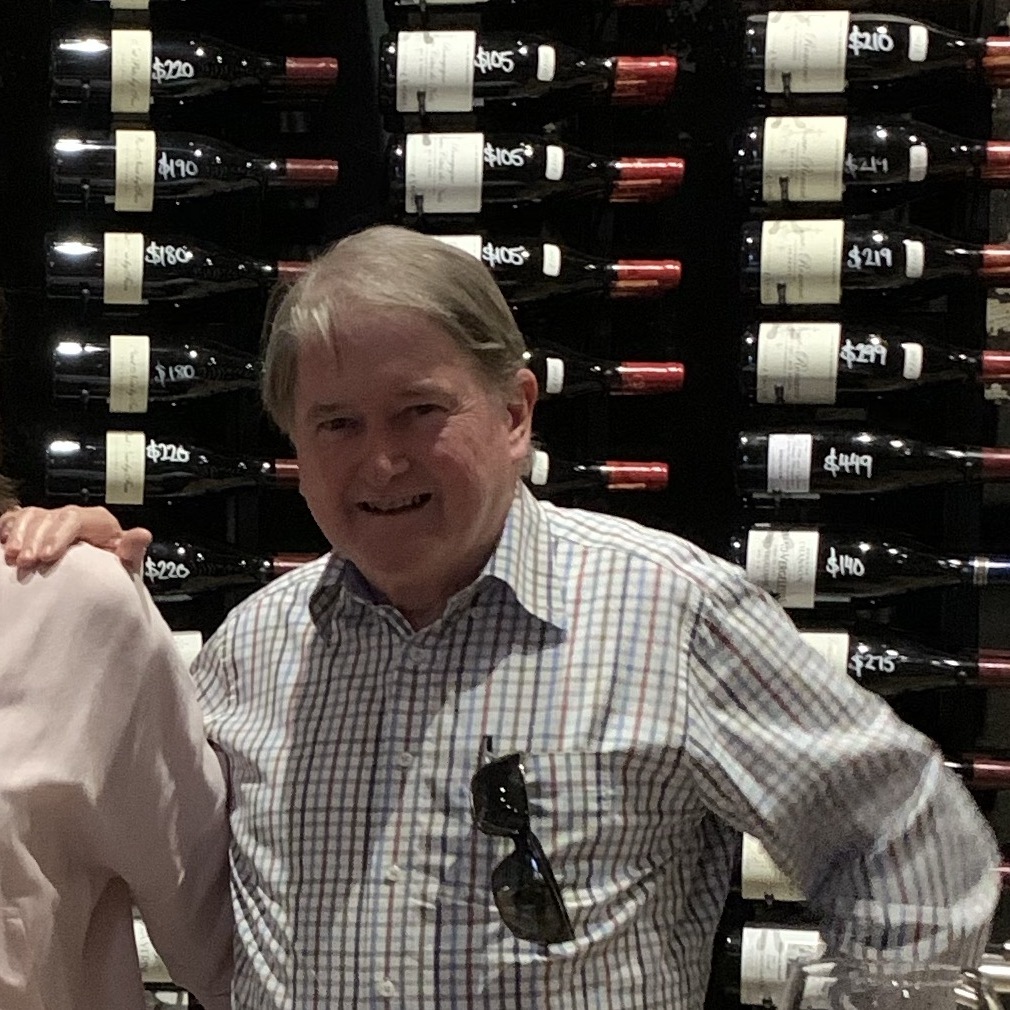
Pontet Canet tasting and dinner with Alfred Tesseron.
The fruits are ripe, ruby. Blackberries, black raspberries, black plum skin, raspberries & strawberries. Dark rich soils, dark spice, crushed dry rocks, black licorice, tobacco, soft leather, graphite, Great balance fruit and earth. The body is velvety and statin. The structure, length, tension and balance are just coming around. The texture is gorgeous. The acidity is round and excellent. The finish delicious and persists nicely.
Photos of; our dinner group, The K&L Bordeaux Buyer-Ralph Sands and Alfred talking about the wines, Clyde Beffa Jr. -Owner of K&L Wine Merchants and Chateau Pontet Canet. — 7 years ago



Planeta
Eruzione 1614 Sicilia IGT Nerello Mascalese 2013

One first noticed it’s luminous and trasparent ruby-red...
...the sweetness and generosity of wild fruits and currants merges with aromas of incense and beeswax and a light almost salty touch invites one to return to one’s glass, creating an almost provoking temptation to taste...
...once in mouth, the 100% Nerello Mascalese from lava sands presents its tasting strength and extraordinary aromas of incense and herbs, hibiscus, and wild fennel.
It’s a luminous and lyrical wine which recounts without obstacles the character and refinement of great red mountain wines but at latitudes not far from Africa....
The elegant tannins of compact texture are presented with extraordinary refinement. — 9 years ago
Château Haut-Batailley
Pauillac Cabernet Sauvignon - Merlot Blend 2006

A little Monday night wine getting ready for Penguin hockey! TIght, and earthy with loads of tannins at the open. Could fill out further.given some time in the glass. I should be holdng this vintage, but have 6 of them, so temptation got me ☺ ... happy with my dirt as it is! — 9 years ago


Mirabeau
Côtes de Provence Rosé Blend

Lovely sipping on top of Marina Bay Sands Singapore — 2 years ago
Château Gruaud Larose
Sarget de Gruaud Larose Saint-Julien Red Bordeaux Blend 1999

Needs a couple hours of air & a few oz of 🥩
K&L notes as follows,
We sell a lot of this favorite second wine and the 1999 is quite elegant, with intense concentration and complexity. Plus, it is drinking well now. This estate is one of K&L’s veteran Bordeaux expert Ralph Sands’ favorites. I just tasted (July 7) another bottle from this recent shipment. Wonderful Bordeaux to drink tonight with a lamb chop. Some smoky aromas with cola and red fruit undertones. Typical, elegant 1999 Bordeaux with a sweet middle palate and smooth finish.
Drink from 2016 to 2024 — 5 years ago

Barefoot Cellars
California Cabernet Sauvignon

Luv the vibe
Luv the tone rich and balance as it said
Seconds alongside with my Cabernet merlot, this one is typical California Wine, fruity sweet with all fruit dominates
🍒🍇🥭
So much fruit berry here
With touch of green mango 🥭🥭🥭
blackberry plum blackcurrant black cherry raspberry so much cherry plum lots of plum here like a giant plum ground
🎡
Feels of sun vibe beach sands shore
🗺
Like a yacht boat with smiley captain
👨🏻🦰 — 6 years ago

Millton
Te Arai Vineyard Chenin Blanc 2016

From the first certified Biodynamic winery in New Zealand comes this estate single vineyard Chenin Blanc. Bright acidity balanced nicely by subtle sweetness and very faint saltiness. Textured, almost waxy. Good tension on the finish.
This single vineyard Chenin Blanc is one of the “1001 wines to try before you die” published by Penguin 2008. I don’t know about that, but this 2016 vintage is certainly a beauty. Gisborne is located in the east coast of the North Island very close to the Pacific. — 8 years ago
Rene Rostaing
Ampodium Côte-Rôtie Syrah 2010
2010 was a very good vintage in Rhône. Rostaing is a well know producer with people that know and drink Northern Rhône wines, not so much with others that do not. The Ampodium is the entry level into Rene & Pierre Rostaing wines. It is a blend of 13 vineyards in Northern Rhône. They are simply one of the very best producers in the region. I spent an afternoon with Rene & his son Pierre tasting in the their cellar and in their La Landonne vineyard as shown in the photos. The 2010 is drinking beautifully with many good years ahead. On the nose; ripe & slightly stewed/baked fruits of; blackberries, dark cherries, strawberries, creamy raspberries, stewed plum, black raspberries, cherries, steeped fruit tea, dry crushed rocks, iron pan, some white & black pepper, bacon fat, grilled savory meats, pork, black licorice, black cherry cola, decayed & fresh red florals with violets. The body is round and medium full. The tannins round, still a little chewy & around 55% resolved. The length, texture, tension and balance are in near perfect harmony. The fruits are; round, ruby & ripe; slightly stewed/baked fruits of; blackberries, dark cherries, strawberries, creamy raspberries, stewed plum, black raspberries & cherries. Steeped fruit tea, dry crushed rocks, chalky minerals, iron pan, coffee grounds, spice, some baking spices w/hints of vanilla, white & black pepper, drying blood, dry herbs/bay leaf, dry stems, moderate levels of bacon fat & pork, grilled savory meats, black licorice, black cherry cola, decayed & fresh red florals with fresh violets for days. The acidly is round and dripping. The long finish is plush, velvety delicious and lasts & lasts. In good vintages, I would put this in blind with the best of of the best new world wines from any vintage that many love; SQN, Booker, Saxum, Alban, Cayuse, Horsepower etc.. I’d bet most of you would pick it over these producers that cost much more $$$. It’s simply one of the best pound for pound wines/producers for this varietal. Especially, for the $$$. Wow, what a wine for the $. $55 upon release. Photos of; Winemaker Pierre Rostaing and our group in their La Landonne vineyard, the small sign that barely identifies their Estate, an example of the Quartz mineral that runs throughout their La Landonne vineyard and the view back onto the river from the top of the very steep La Landonne Vineyard. Producer notes and history...Rene Rostaing produced their first wine in 1971. However, it took almost three decades before wine became a full time occupation for Rene Rostaing. Domaine Rene Rostaing came about through marriage. The wife of Rene Rostaing was the daughter of the famed Cote Rotie grower, Albert Dervieux, and the niece of Marius Gentaz-Dervieux who gave Christine the vineyard land that became the Northern Rhone estate for Rene Rostaing. Through inheritance from Albert Dervieux Thaize (his father-in-law) who retired in 1990, and from Marius Gentaz Dervieux, his uncle, Rene Rostaing expanded his holdings, giving him some of the best terroir in Cote Rotie. The new vineyard land was basically 3 small parcels in the La Landonne, Cote Brune and Vialliere lieux-dits. This initial expansion from his initial tiny parcel, allowed Rene Rostaing to change careers and become a full time vigneron. Since 2007, the estate has managed by Pierre Rostaing, (son) of Rene Rostaing. Currently Rene Rostaing owns 7.5 hectares of vines that is spread out among 20 different parcels located in 14 locations. Perhaps the most celebrated vines of Rene Rostaing are the 1.6 hectares of vines they own in the La Landonne vineyard (photo). On La Landonne, the vines are more than 60 years old. Some vines are even close to 100 years of age! Those are his largest holdings. The smallest vineyards of Rene Rostaing are located on Cote Blonde. Rene Rostaing also has vines planted in; Fonjean, La Vialliere, Le Plomb, Bouchare, Leyat, La Roche and La Tupin. Their oldest vines are more than 70 years old and are used for Rene Rostaing Cote Blonde. The majority of those plantings are on the steep hillsides with mica, schist and rocky soils. 25% of those vines are closer to the bottom of the slopes and on the flats. Rene Rostaing remains a traditional Cote Rotie producer who is not among the last to harvest. His wines are aged using very little new, French oak barrels. On average, Rene Rostaing Cote Rotie are aged in about 10% new French oak barrels. Rene Rostaing produces 4 different Cote Rotie wines. Rene Rostaing Ampodium, which was previously known as Rostaing Cuvee Classique, is a blend of 13 sections of different vineyards, but it does not include their best holdings on La Landonne or Cote Blonde. The fruit for Rene Rostaing Ampodium has at least 40% or more of the stems removed and run between 12-13.5% abv. The wine is usually made from 100% Syrah and is aged in an average of 15% to 25% new, French oak barrels. The amount of new oak can be less, depending on the character of the vintage. About 1,750 cases are produced each year. The wine is no longer called Cuvee Classique, the name was changed to Rene Rostaing Ampodium with the 2009 vintage. Rene Rostaing La Landonne comes from a terroir consisting of sands with iron oxide and traces of quartz. This wine is always produced from 100% Syrah. The grapes are partially destemmed, with about 10% to 20% of the stems removed, depending on the vintage. There are vintages when no destemming takes place. The remainder of the grapes are whole bunch fermented in stainless steel vats. Rene Rostaing is not a believer of using too much new oak for the aging, which on average uses 10% new, French oak barrels and the remainder of the harvest is aged in demi-muids (600 liter) and French oak barrels. This wine is like most wines from La Landonne, masculine and meaty in character, requiring at least a decade to soften and develop. On average, Rene Rostaing La Landonne produces less than 600 cases depending on what the vintage delivers. Rene Rostaing Cote Blonde is perhaps his best. It’s produced from a blend of 95% Syrah and 5% Viognier. The grapes are co-fermented. The vineyards is planted in the region call Arzel. Arzel is a poor, mineral laden soil with deposits of Silex and Mica on a steep hillside. The vines are more than 50 years of age. The grapes are partially destemmed…35% to 50% of the stems are removed. The remainder of the grapes are whole bunch fermented in stainless steel vats.
The remainder of the harvest is aged in demi-muids. This one is the hardest to find and most collectible of all their wines. In fact, they only produce close to an average of 350 cases of Cote Rotie in most vintages. Rene Rostaing Cote Brune made its debut with the 2013 vintage. The vines were once part of the holdings of Marius Gentaz, which eventually passed to Rene Rostaing. Rostaing replanted those vines in 2000. Made from 100% Syrah. — 9 years ago

Paul T, Missing My Beautiful Wife 24/7
Is this considered cold climate or warm climate?
Viuva José Gomes da Silva & Filhos
Collares Ramisco 2013

I cannot describe how excited I’ve been for this bottle.
From Portugal’s tiny Colares wine region, this is the famed Ramisco grape, grown in vines in the sands off the coast of Sintra. Back when phylloxera destroyed most of Europe’s grapevines, these survived as the parasite couldn’t make its way in the sands the grapevines grew in. The Portuguese crown then nationalized the wine- unique to Portugal- and used it in diplomacy as a form of soft power.
The wine starts with a roughness that smooths into a beautiful, medium bodied flavour of black cherry and blackberry. Think of a juicy California Pinot Noir that manages the punch of a Rioja.
A wine worthy of its great history.
— 3 years ago




Château de Maligny
Montée de Tonnerre Chablis 1er Cru Chardonnay

Classic cucumbers, lychee, pear, cold smoke, lime pith, light guava core. On the palate, soft on entry, but dragging a desert dry backbone over diatomaceous sands on a steely chain, til orange-lime citrus twists to lemon that jumps from the glass with a nano dusting of white pepper. — 7 years ago
Domaine Rietsch
Crémant d'Alsace Extra Brut Auxerrois Blend 2014

Interesting. Brioche, oxidative, apple, lush and surprisingly sweet - or at least what feels like RS. More integrated day 2. Penguin. — 8 years ago
The Little Penguin
South Eastern Australia Pinot Grigio 2015
Little aftertaste, not too dry, flavourful. Drank with turkey and paired well. — 9 years ago
Tenuta delle Terre Nere
Guardiola Etna Rosso Nerello Cappuccio Nerello Mascalese 2014
From the north face of Mount Etna between 800 and almost 1000 meters and from the leanest of volcanic sands, lava fields, and basaltic pebbles. The ash, or Etna dust, is ever-present but just as well matched by a heap of rose petals. Barbaresco-esque, it's striking and haunting. Scary good and deserved of a top notch cinematographer and ultra-hipster soundtrack. — 9 years ago
Bob McDonald

A highly awarded Grenache from McLaren Vale made by the talented Peter Fraser. Sweet red earthy fruits but not overly raspberry as Aussie Grenache often is. Has a lovely sweet smooth texture. James Halliday awarded this wine his Wine of the Year in 2020 and 99 points. Vines planted in 1946 in ancient sandy soils ideal for this Grenache. If not Australia’s best Grenache then certainly in the conversation. The main reason we drank this wine a few days ago was to remember Peter Fraser who sadly passed away unexpectedly in a tragic house fire. — 10 months ago