Kings Of Prohibition
Lazy Susan Ranch
Diamond Mountain District Cabernet Sauvignon 2014



Paul T, Missing My Beautiful Wife 24/7
Quite a few on winebid tomorrow, I didn’t realize they have more than just one main high end label now.Kings of Prohibition
Lucky Luciano Barossa Valley Shiraz 2022
A sweet dark fruit (blackberry and plum), vanilla & chocolate. — 2 years ago
Kings Carey Wines
Santa Ynez Valley Rosé of Grenache 2019

Favorite Rosé of 2019 so far! Right amount amount fruit, acid, texture and chug ability. Buy two, if not more. They drink to easy. — 6 years ago
Old Forester
1920 Prohibition Style Kentucky Straight Bourbon Whisky
One of my favorites so far. Big, sweet, almost like candy, with hint of chocolate? ~$52.00. 115 proof. — 7 years ago
The Wonderland Project
Two Kings Pinot Noir 2016

I'm calling this one Weekday Pinot. Going with roast bacon wrapped chicken breast , sweet tater planks and baby sweet peppers. Nice for the price! Good balance of savory to fruitiness. — 8 years ago
The Royal Tokaji Wine Company
5 Puttonyos Furmint Blend 2016

Royal Tokaji – 5 Puttonyos Aszú 2016
Tokaj – Hungary 🇭🇺
Overview
A classic Tokaji Aszú, made from grapes affected by Botrytis cinerea (noble rot), then macerated with must to create Hungary’s legendary sweet wine. The 5 puttonyos designation signals a rich yet balanced level of sweetness, around 120 g/L residual sugar. (Educational note: “Puttonyos” refers to the traditional baskets of aszú berries added — the higher the number, the sweeter and more concentrated the wine.)
Aromas & Flavors
Lush apricot, honey, and candied orange peel at the forefront, layered with quince, dried fig, and lemon curd. Hints of saffron, ginger, and toasted almond bring exotic spice and complexity.
Mouthfeel
Velvety and lusciously sweet, balanced by vibrant acidity that keeps it lifted. Full-bodied yet precise, with a long, honeyed finish that leaves both richness and freshness.
Food Pairings
Perfect with blue cheese, foie gras, or fruit tarts. Also excellent with roasted nuts, crème brûlée, or simply savored on its own as a meditative dessert wine.
Verdict
A benchmark Tokaji — rich, layered, and perfectly balanced. The 2016 vintage of Royal Tokaji 5 Puttonyos Aszú offers indulgence and structure, proving why Tokaji has been called “the wine of kings.” 👑🍷
Did You Know?
Tokaji Aszú is one of the world’s oldest regulated wines — protected since 1737, nearly a century before Bordeaux’s 1855 classification.
Collector’s Rarity 📌
Royal Tokaji’s Aszú wines are globally sought after, and a 5 puttonyos 2016 bottling represents both a collectible dessert wine and a piece of vinous history — a year ago
Marchesi di Barolo
Antiche Cantine Dei Marchesi Di Barolo Nebbiolo 2010

Barolo: the king of wines and the wine of kings, some say. Pale ruby color with red fruit, leather, and rose petals. Truth is, this twelve year old wine is just coming together in the glass with vivid tannins, high acidity and contrasting tart sweet red cherry profile. After pairing it with this tomato basil pasta I can attest, “I do feel like a king.” — 4 years ago
Kings Ridge
Willamette Valley Grown Pinot Noir 2016

Really like this one. It’s meatier than most Pinots but has a wonderful flavor. Catches the middle of your tongue and hangs on for a little while. — 6 years ago
Carter Cellars
The Three Kings Beckstoffer To-Kalon Vineyard Cabernet Sauvignon 2013

PNP > Big wine! Very well made, lot’s of stuffing here; Kudos @Mike Smith 👍🏻👏🏻👏🏻👏🏻Excellent effort & cheers 🍇🍷 — 7 years ago
Kings of Prohibition
'Al Capone' Cabernet - Shiraz 2020

Tastes bold, full bodied, off dry, medium acidity, medium high tannins, black cherry. Finishes dry & long, complex & beautiful. — 8 years ago
Kongsgaard
Kings Farm Chardonnay 2012
@Benjamin Keator had his hosting at the CC tonight and it was absolutely incredible. What a night of gorgeous wines! All wines are guessed blind.
Out of the 3 whites, I guessed they were all 2012s (they were). I ended up guessing this was Marcassin based on the smoked waxy note I got with this (always get with Marcassin). It wasn’t buttery, but it wasn’t overly sulfuric. It had low acidity too and a fair amount of fruit. This ended up being most (including mine) white of the night. — 8 years ago

Ravenswood Winery
Icon Native Sonoma Mixed Blacks Red Blend 2013
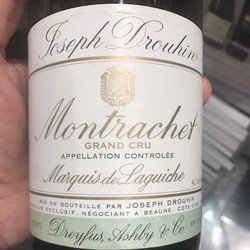
In the early 1850s the first significant vineyards were planted in Sonoma. Over the next half century, through a rigorous process of trial and error, the components were narrowed to four distinct varieties – petite Sarah, Zinfandel, Carignane , and Alicante Bouschet– each demonstrating extraordinary quality. Ravenswood ICON is a revival of this traditional “native Sonoma mixed blacks“ blend produced from old, low production, vineyards planted before Prohibition and is a tribute to Sonoma County’s incredible ancient vines. 14.8% ABV. — 2 years ago
Cavallotto
Vigna San Giuseppe Riserva Bricco Boschis Barolo Nebbiolo 2013

2013 vintage. Decanted and tasted immediately and after 30 mins. Reticent nose. Medium-heavy body. Massive flavors and structure. Wouldn’t open it any time soon. Phenomenal now but so so intense. If you can Potsie it for a decade plus, do so. Another reminder as to why Barolo is the wine of kings. 11.01.24. — 2 years ago

Kings of Prohibition
Al Capone Scarface Cabernet Sauvignon Shiraz

Fruity but still dry but not drying. — 6 years ago
Kings of Prohibition
Barossa Valley Cabernet Sauvignon Shiraz

Trader Joes — 6 years ago
Kings Ridge
Willamette Valley Pinot Gris 2016

White peach pit on the nose round and fuzzy mouth feel. Plum. Skin. A hint of grapefruit peel delightful with hearth baked pizza- meatballs, sausage, grilled eggplant is the earthy counterpoint to this summery sonnet. A toast to flowers and a sun warmed meadow. This is a clarinet or possibly a harpsichord but not a fiddle or a flute. — 7 years ago
Merry Edwards
Russian River Valley Pinot Noir 2015

Always a good addition to our annual crab feed is the magnum of Merry from the Kings. Tasty Russian River gem. — 8 years ago
Seavey Vineyard
Estate Grown Cabernet Sauvignon 2013
The nose reveals; dark currants, blackberries, heavy black plum, black raspberries, dark cherries and some blueberries. Black tea, expresso roast, anise, crushed dry rocks, big vanilla, clove, a little nutmeg, dry underbrush, sweet tarry notes, leather, woody notes with dark fresh & withering flower bouquet.
The body is big and lush. The tannins are big, meaty and tarry. Very dark currants. Blackberries, heavy black plum, black raspberries, dark cherries and some blueberries & strawberries as they open up. Black tea, expresso roast, steeped fruit tea, anise, crushed dry rocks, dry clay, big graphite, big vanilla, dark spice, clove, light dry herbs, a little nutmeg, dry underbrush, sweet tarry notes, leather, cedar with violets dark fresh & withering flower bouquet. The acidity is round, fresh and beautiful. The big, long, well balanced finish is excellent and look forward to having this in 15-20 years. This one will be a stunner!
Photos of, the barn where they make wine and hosts tastings, our private tasting area inside William’s old office. William desk and their outside terrace area.
Producer history & notes...Seavey Vineyard is located along Conn Valley Road in the eastern hills of Napa Valley, about 15 minutes from the valley floor.
This historical property was originally a cattle ranch. However, records indicate grapes were planted on some of the hillsides as early as the 1870’s. The stone dairy barn, still in existence, was built in 1881.
William & Mary Seavey purchased this property in 1979. The estate was originally founded by the Franco-Swiss Farming Company in 1881 which, closed down when Phylloxera destroyed their grape vines and the Volstead Act (Prohibition) went into effect. At the time of their purchase, they were a horse and cattle ranch. They quickly planted the slopes with grapes and initially sold their fruit to Raymond Vineyards. They have never purchased grapes, all their wine is made from estate grapes. Their vineyards are separated into 20 plus individual blocks.
Today, the property is about 200 total acres of which, 40 acres are planted to vine. Their hillside vineyards produce low yields of rich concentrated fruit. A small block of Chardonnay grows in a cooler lower part of their property. Besides grapes, they also raise cattle which are used to graze the hillsides. They feed the vineyard with the cattle cuttings. In 2003, they were one of the first Napa wineries to install solar.
Mary passed away in 2008 and William died in 2016. There daughter Dorie returned to the family business and now oversees the winery operations. Her brother Arthur also handles national and some small international sales, primarily to restaurants. However, most of their wine is sold direct to consumers.
Seavey’s first commercial vintage was released in 1990 a year after they renovated the stone dairy barn into a working winery. Today this stone building is the centerpiece of the property and is where tastings are hosted.
Since 2011, Jim Duane has been their day to day Winemaker. He’s worked at Robert Mondavi and Stag’s Leap Wine Cellars. It should also be noted that Philippe Melka Winemaker/Consultant has been with Seavey since 1995...one of Philippe’s two initial wine making jobs in the Napa Valley were with Seavey and Lail Vineyards.
Seavy makes about 3,200 cases annually depending on what mother nature brings. They make around two hundred cases of Chardonnay, slightly more Merlot and the rest is of the production is comprised of their Caravina and Estate Cabernets.
— 8 years ago

Paul T, Missing My Beautiful Wife 24/7
The Vineyardist 2nd label.
This one surprised me by how much air it needed to open up. Had a splash on day 1 and immediately corked it back up for a day 2 decant. Definitely not an over extracted Cabernet just to please the masses. My ratings might be higher than others but I work these wines to get the best out of them.
Interesting note I found-
The Vineyardist is a Diamond Mountain property with a long history. In the late 19th century it was purchased by a Dutch shipping captain who planted vineyards and made wine. During prohibition the vineyards were replaced with nut and prune orchards. In 2000 the property was purchased by Dirk Fulton and Becky Kukkola, who began replanting some of the 80 acres to vineyards. — 10 months ago