Per Tutti
Ca' del Bosco
Cuvée Annamaria Clementi Brut Franciacorta Champagne Blend 2015



Les Vins Pirouettes
Le Tutti Frutti de Stephane Pinot Gris Blend

Caramelized pineapple! — 4 years ago
Agrapart & Fils (Pascal Agrapart)
7 Crus A Avize Brut Champagne

The NV Brut 7 Crus is an attractive, easygoing wine that will drink well upon release. A touch of Pinot softens the edges nicely, giving this Chardonnay-base Champagne tons of accessibility. Lemon confit, chamomile, mint and white pepper all open in the glass, but it is the wine's textural feel that makes the 7 Crus so rewarding to taste and drink today. This release is equal parts 2017 and 2016, from parcels in Avize, Oger, Oiry, Cramant, Avenay Val d’Or, Bergères les Vertus and Mardeuil. About 25% of the wine was done in neutral oak, the rest in cask. Dosage is 7 grams per liter. Disgorged: April, 2020. (Antonio Galloni, Vinous, November 2020) — 6 years ago

Pratello
Don Vicente Nero per Sempre Rebo

Full complex, fascinating!! 100% Rebo, a real rarity - minestrone Toscano con cavolo nero - should be decanted min 1 h — 7 years ago
The Standish Wine Company
Single Vineyard Shiraz 2006
This wine is made by Dan Standish who started his career by traveling all over the world learning the skill of winemaking. He returned to Australia to make wine at Torbreck. After making Torbreck, he starting his own project. This wine is produced from a vineyard with 100 year old vines with a yield of only a 1/2 ton on fruit per acre. In comparison to quality Napa producers, their yields are 2-3 tons per acre. Dan is absolutely one of the very best producers in Barossa.
On the nose, mulberries, olallieberries, blueberries, blackberries, black raspberries, black plum, plum, blackberries, black cherries, dark berry cola, vanilla, dark spice, black pepper, dry crushed rocks, limestone minerals, soft leather, saddle-wood, coffee grounds, black licorice, dark, rich soil, lavender and violets.
The body is full, rich, ruby, lush and very inky. The texture is elegantly sexy. The 06 is still youthful & fresh. It still needs more time but, it’s delicious tonight. The length, tension, structure and balance are just coming into it own. mulberries, Olallieberries, Boysenberries, blueberries, blackberries, black raspberries, black plum, plum, raisins, blackberries, black cherries, dark berry cola, vanilla, dark spice, black pepper, dry crushed rocks, limestone minerals, soft leather, saddle-wood, coffee grounds, black licorice, dark, rich soil, purple flowers, lavender and violets. The acidity is round and beautiful. The finish is long, thick, ruby, lush, elegant, well balanced with deep heat penetrating dark spices that rise off the palate and lasts several minutes. The 06 is still 5 years from it peak.
Photos of; The Standish Cellar Door, Owner/Winemaker Dan Standish, beautiful Barossa Vineyards and the old tasting room — 8 years ago
Black Hills Estate Winery
Per Se Red wine 2014

Beautiful example of the longevity that BC Syrah has. Still fruit and balanced at 10 years — 3 years ago

Fattoria di Fèlsina Berardenga
Chianti Classico Sangiovese Blend 2019

Equibilibrato, era buona per l’appertivo in summer. Questo chatau e’ il nostro favatito. — 4 years ago
Château Gros Moulin
Per Vitem Ad Vitam Red Bordeaux Blend 2016
2016 vintage. 80% Cabernet Franc and 20% Malbec. Another strong effort from this excellent producer. Unusual blend for Bourg. A little understated initially, actually better the next day, so you might want to decant. Elegant and fresh with well-integrated high alcohol (14,5%). While not as impressive as the pure Malbec from this estate, it's a solid effort that will age well for at least 10 more years. — 6 years ago
Grey Stack Cellars
Dry Stack Vineyard Rosemary's Block Sauvignon Blanc 2018

At $22 per bottle, I challenge you peeps to better this in terms of quality, and sheer enjoyment. Prior notes apply. — 6 years ago



Paul T, Missing My Beautiful Wife 24/7
Still a Bevan beaterMichele Chiarlo
Nivole Moscato d'Asti 2018

I've been drinking this for 20 years. Consistently excellent. A light, deceptively complex Moscato, featuring lychee, grapefruit and bread on the nose. Always good, and $12 per half bottle. Points for quality/cost ratio. — 7 years ago
Styring Vineyards
Signature Pinot Noir
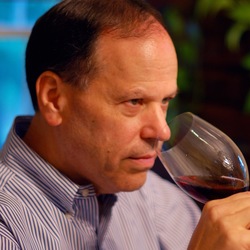
Family-owned and operated growing just over ten acres of grapes and producing around 1000 cases per year. Berry, spice and floral scents pop on the nose. Fresh fruit flavors, raspberry and cherry, citrus notes and hints of vanilla, great balance with acidity. Firm tannins, lingering finish ending with earthy tones and a nudge of pepper. An enjoyable Pinot at a reasonable price. Has short term aging benefits, but why wait. — 8 years ago

Long Shadows Vintners
Poet's Leap Columbia Valley Riesling 2021
The 2021 Poet's Leap shows lychee, lime zest and crushed green apple. It’s graceful and sweet, with tropical citrus and crisp minerality. A salty flourish accentuates mango nuances on an outstanding, fresh finish. This is balanced and refined, with under one gram of residual sugar per liter. $20.00 (Eric Guido, Vinous, February 2023) — 4 years ago
Château Cantemerle
Haut-Médoc Red Bordeaux Blend 2010
Not the team’s I wanted to see, so I’ll just stick to the basics. Went well with some A5 coffee crusted New York Strip, the steak 🥩 is so rich you don’t want to waste it on a fruity wine
The 2010 is a blend of 60% Cabernet Sauvignon, 30% Merlot, 6% Cabernet Franc, and 4% Petit Verdot. The vineyard is situated on deep gravel deposits in the Macau and Ludon villages of the appellation and has 9,600 vines per hectare.
Vinious 93 The 2010 Cantemerle is vigorous and open on the nose, a mixture of red and black fruit with cedar and humidor scents. I admire the focus and detail. The palate is rounded in texture on the entry. This is a plumper, richer, more fruit-driven 2010 with a lush finish on the context of the growing season. You could broach this now, although I would prefer to leave it another three or four years. This is another excellent wine and candidate for most over-performing cru this vintage. Tasted blind at Farr Vintners 10-Year On Bordeaux horizontal. — 5 years ago
La Rioja Alta
Gran Reserva 904 Rioja Tempranillo Graciano 2010

Dill - vanilla - iconic - classic - ethereal - the best wine per $ that exists — 6 years ago
Bohème Wines
Taylor Ridge Vineyard Chardonnay 2016

Darker yellow appearance, very light aromatics, minimal oak, lemon, high acid, medium + minerals, 13.9% EtOH
2016 crop of Wente Selection Chardonnay hand-harvested on 9/23 with a yield of 1.05 tons per acre. Whole-cluster pressed and cold fermented in seasoned French Burgundy barrels. 147 cases produced. — 7 years ago
Per Me Sola
Rosso Toscana

$8 of grape butter — 8 years ago
Château Brane-Cantenac
Grand Cru Classé en 1855 Margaux Red Bordeaux Blend 2005
I have a six-pack of this 05. I thought after 10 years in bottle, it would be interesting to check in on its evolution. While tasty, I’ll wait another 8-10 to open another. Even after 2-3 hours in the decanter, it’s still a very young adolescent. On the nose, slightly sour blackberries & dark cherries, dark currants, baked black plum, haunting blue fruits, anise, whiff of spice, steeped tea, dry stones, dry crushed rocks with dry top soil, caramel, vanilla with fresh & dry red florals. The body is thick & full. Tannins are starting to round out. It’s velvety on the palate. The fruits are; bright, fresh & ripe and really show the greatness of the 05 vintage. Dark currants, blackberries, dark cherries, baked black plum, haunting blue fruits, baked strawberries, cherries, raspberries on the long set, dark spice, clay & loamy dry top soil with crushed rocks, dry stones, cigar with ash, graphite, dry stems, slight herbaceous character, mint, used leather, clove, caramel, vanilla, fresh & dry red florals with violets. The round acidity is about perfect. The structure and length are still strong. The balance is in harmony. As for the long finish, it’s lush, ruby, rich and well polished. Photos of; Chateau Brane Cantenac, large wood vats, Henri Lurton and Estate vines. Producer notes and history...Chateau Brane Cantenac began in the early 17th century. At the time, the estate was known as Domaine Guilhem Hosten. Even that far back, wine was produced from the property. In fact, the wine was so highly regarded it was one of the more expensive wines in Bordeaux. It sold for almost as much money as Brane Mouton. This is interesting because of who went on to buy the vineyard in the 1800’s. The Baron of Brane, also known as “Napoleon of the Vineyards”, purchased the Chateau in 1833. At the time of the sale, the estate was called Chateau Gorce-Guy. To get the funds needed to purchase the Margaux vineyard, the Baron sold what is now called Mouton Rothschild, which was at the time of the sale, known as Chateau Brane-Mouton. Not such a good move with hundreds of years in hindsight! In 1838, the Baron renamed property taking his name and the name of the sector where the vineyards were located and called it Chateau Brane Cantenac. The Chateau later passed to the Roy family, who were well-known in the Margaux appellation in those days, as they owned Chateau d’issan. Moving ahead to 1920, the Societe des Grands Crus de France, a group of merchants and growers that owned several chateaux located in the Medoc including; Chateau Margaux, Chateau Giscours, and Chateau Lagrange in St. Julien, purchased Chateau Brane Cantenac. Five years later, M. Recapet and his son-in-law, François Lurton, took over Brane Cantenac along with Chateau Margaux. Lucien Lurton (the son of François Lurton) inherited Brane Cantenac in 1956. Today, the estate is still in the hands of the Lurton family. Brane Cantenac is owned and run by Henri Lurton. After being given the responsibility of managing Brane Cantenac, it was under the direction of Henri Lurton that large portions of the vineyard were replanted. Vine densities were increased, the drainage systems were improved and the plantings were also, slowly changed. The vineyard of Brane Cantenac is planted to 55% Cabernet Sauvignon, 40% Merlot, 4.5% Cabernet Franc and .5% Carmenere. Carmenere was used for the first time in the 2011 vintage. The only other Chateau I know that still uses Carmenere is Clerc Milon. The 75 hectare Left Bank vineyard of Brane Cantenac is essentially unchanged since it earned Second Growth status in the 1855 Classification. At least that is the case with the 45 hectares used to produce the Grand Vin of Brane Cantenac. Those 45 hectares are planted surrounding the Chateau. Those vines are located just in front of the Cantenac plateau and are the best terroir that Brane Cantenac owns. They have other parcels, which are further inland and much of those grapes are placed into their second wine, Le Baron de Brane. Those additional hectares can be divided into 3 main sections. Behind the Chateau, they have 15 hectares of vines on gravel and sand, 10 hectares across the road with sand, gravel and iron and a 13 hectare parcel with gravel called Notton, which is used for their second wine. The vineyard is planted to a vine density that ranges from 6,666 vines per hectare on the plateau and up to 8,000 vines per hectare for the vines located behind chateau, in their sandier soils. The higher levels of vine density are always found in the newer plantings. The terroir of Brane Cantenac consists of deep gravel, sand and clay soil. Experiments in the vineyards are currently looking at becoming more organic in their vineyard management. Today, more than 25% of Brane Cantenac is farmed using organic farming techniques. It is expected that over time, the amount of hectares farmed with organic methods will be increased. Brane Cantenac has gone through 2 relatively recent modernization’s in 1999, when they added began adding the first of their smaller vats to allow for parcel by parcel vinification and then again in 2015 when they completed a much more complete renovation of their cellars and vat rooms. While Brane Cantenac is a traditional producer, they are no stranger to technology as they were one of the first estates to embrace optical grape sorting machines. In very wet vintages, they can also use reverse osmosis. To produce the wine of Chateau Brane Cantenac, the wine is vinified in a combination of temperature controlled, traditional, 22 oak vats, 18 concrete tanks and 20 stainless steel vats that vary in size from 40 hectoliters all the way up to 200 hectoliters, which allows for parcel by parcel vinification. 40% of the fermentation takes place in the oak vats. The oldest vines are vinified in vats that are selected to allow for separate parcel by parcel vinification. The younger vines are vinified more often together in the same vats. However, the Carmenere is entirely micro-vinified, meaning that those grapes were completely vinified in barrel, using micro-vinification techniques. This can also happen because the amount of grapes produced is so small. Some vats can be co-inoculated, meaning they go through alcoholic fermentation and malolactic fermentation simultaneously. At Chateau Brane Cantenac, malolactic fermentation takes place in a combination of French oak tanks and barrels. The wine of Brane Cantenac is aged in an average of 60% new, French oak barrels for 18 months before bottling. The initial 2 months of aging is done with the wine on its lees, which adds more depth to the wine. There second wine is Le Baron de Brane. Le Baron de Brane is not new. In fact, previously, the second wine went under the name of Chateau Notton, which took its name from one of the main parcels where the grapes were planted. During the late 1950’s and into the 1960’s, having a second wine was important as the estate declassified 3 vintages, due to extremely poor, weather conditions in 1956, 1960 and 1963. Production of Chateau Brane Cantenac is about 11,000 cases per year. — 9 years ago


Somm David T
Independent Sommelier/Wine Educator
I bought this as Sofia & I visited the property in September of 2015 when this was being birthed. I meant to enjoy it on her birthday a while back but ended up in the ER from food poisoning I had at a restaurant. Ugly for a week.
Franciacorta is Italy’s sparkling region much like Champagne is to France. It is very near to the Italian summer hot spot, Lake Garda.
The body on this is beautiful, rich, almost fluffy with tiny beads. Starts with lemon chiffons, green apple, grapefruit, yellow melons, some lime notes, white cream, dry herbs, white spice, slightly moist, powdery to crushed chalkiness, saline, yellow & white flowers, perfect acidity and a well made, knitted, beautiful balanced & tensioned, elegant finished that lasts two-minute that falls on minerality.
Annamaria Clementi Reserve is tribute to the founder, Maurizio Zanella’s mother and made in only the very best of years.
It is a blend of; 82% Chardonnay, 15% Pinot Nero & 3% Pinot Bianco. 6 months is small oak casks, 63 mg of sulfur dioxide per L. Zero dosage and 13% alcohol.
Happy belated birthday honey! — 2 years ago