Blind Corner
Château Mouton Rothschild
Pauillac Red Bordeaux Blend 2005

Tasted blind . Slightly more mature colour than 1 . Ruby with some garnet and a more garnet tinged rim . Cooler more mineral on the nose , touches of grafite and wet rocks , sea spray , with some dark spicy cassis . On the palate this is more dark cassis , spicy grafite , cedar , touch of iron filings . Good roundness on the palate , with dusty tannins and balanced acidity, intense and saline . Long cedar tinged grafite length . Quite intense and stlight sterner overall , a little more aloof , more Cabernet , darker in style. Better in 5-10 years and will last well a further 10-20. Had this as Margaux . My 5th placed wine . — 5 months ago
Château Latour
Premier Grand Cru Classé Pauillac Red Bordeaux Blend 2005
Tasted blind. Medium deep garnet ruby and medium garnet ruby rim . Quite cool and restrained , again lots of grafite and mineral , dark fruits . This is quite deep and dark spicy cassis , blackberry and sea spray , saline . Quite dense and robust on the palate again , lots of fine but ripe tannins. Very long , dense , cassis , cedar grafite saline finish . This is a complete and great example of 2005 , great balance and enormous length , the longest of all on show here. Drinkable now , but surely it’s best days are in the future , wait another 5 -10 years , will last well a further 20 - 25 if not more . The apex of 2005 ? For me this had to be the Latour , and an archetypal example of Latour no less . 1st place and the gold medal . — 5 months ago
Opus One
Napa Valley Cabernet Sauvignon Blend 1997


Opened about four hours prior to service and allowed to breath. Two bottles were opened tonight from the same cellar and one of the corks showed some small signs of seepage but both wines showed equally. No formal notes. The 1997 Opus One pours a fairly youthful looking deep ruby color with moderate signs of sediment and a near opaque core. The nose exhibited powerful aromas of dark fruits, organic earth, tobacco, leather, horse blanket (brettanomyces?!), and fine baking spices. On the palate, the wine is dry and the structure remains quite firm but the texture is plush and almost chewy. The notes on the nose are confirmed and the finish is long and satisfying.
But the tasting notes only tell half the story here. This was consumed alongside a 1990 Chateau Mouton Rothschild. Had these been served together double-blind, I would have absolutely understood if someone called both as left-bank Bordeaux. Yes, the texture was plush and yes, the color was dark(er), but only just. It was just waaaay more Old World leaning to me with the earth and presence of brett. Which makes me wonder, why hasn’t brett been noted very often in other TN’s for this wine? Only (Charlie Carnes and OneFive) really address it directly and maybe this is what most are getting at when they mention “Bordeaux-like” and all the Pauillac vibes. What I can confirm is that these notes were consistent between two bottles from the same case, still in their tissue paper, so I’m reasonably confident that this is characteristic of the 1997 Opus One. I digress; I liked the wine. There, I said it. It was a bit of a one foot in Old School Napa, one foot in New School Napa, handled with an Old World touch. I liked it even better side-by-side with the ’90 Mouton, especially considering the relationship between the two. That being said, folks that can’t get down with a little brett will be turned off by this vintage of Opus. In my case, I would enjoy another opportunity to drink the 1997 some time. Great now with some air to stretch its legs and should be enjoyable through the next decade.
— 3 years ago
Bounty Hunter
Blind Justice Beckstoffer to Kalon Vineyard Cabernet Sauvignon 2018

2018 vintage. Rich, dense and balanced…even when approaching 16%. Beautifully constructed. — 5 years ago
Château Lafite Rothschild
Pauillac Red Bordeaux Blend 1961
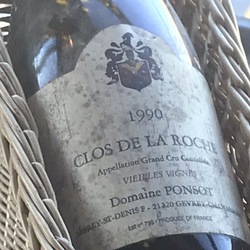
Tasted blind. Light reddish/scarlet and mostly translucent. Notes of red fruit, tobacco leaf, violets. Very linear in its delivery, with no tannins and a mid-palate that is very light. Very refined. Guessed 61 Mouton. A good but not great Lafite... the critics are correct in marking this a level below some of the other 61 first growths. Drink up. (M's 60th bday 11th of 14) — 5 years ago

Rochioli
Three Corner Vineyard Pinot Noir 2011
2012 vintage. Really good; developed some additional notes beyond the big youth. Someone noted they smelled it 6 feet away. Indeed fragrant. — 6 years ago
Chateau Montelena
Napa Valley Chardonnay 2023

Chateau Montelena — Chardonnay 2023
Napa Valley, California, USA 🇺🇸
Overview
Released as a tribute to the 50th anniversary of the historic 1976 Judgment of Paris, this vintage continues the legacy that forever changed the perception of California wine. Crafted in Montelena’s unmistakable style, it favors precision, freshness, and restraint over richness, proving Napa Chardonnay can be both powerful and elegant.
Aromas & Flavors
Lemon curd, baked pear, crisp apple, citrus blossom, and subtle white peach are beautifully intertwined with delicate hints of wet stone, light vanilla, and restrained oak.
Mouthfeel
Medium-bodied with vibrant acidity and exceptional balance. Rich enough to satisfy yet remarkably focused, the palate delivers silky texture, impressive tension, and a long, refined finish that never feels heavy.
Food Pairings
Lobster, scallops, roasted chicken, creamy risotto, grilled halibut, or triple-cream Brie.
Verdict
A benchmark New World Chardonnay that continues to set the standard nearly five decades after its historic triumph. Complex, poised, and beautifully balanced, it is a wine that appeals equally to classic California Chardonnay lovers and those who typically favor more restrained Old World expressions.
Did You Know?
The 1973 Chateau Montelena Chardonnay won the white wine category at the 1976 Judgment of Paris, defeating France’s finest Burgundies in a blind tasting and forever changing the reputation of California wine on the world stage. The 2023 vintage celebrates the 50th anniversary of that landmark event.
🍷 Personal Pick
I’m generally selective with Napa Chardonnay, often preferring leaner, mineral-driven styles. Chateau Montelena remains one of my rare exceptions. It captures the generosity of Napa’s sunshine while preserving freshness, finesse, and impeccable balance. This is a permanent fixture in my cellar and one of the few New World Chardonnays I’d confidently pour for someone who believes they don’t enjoy Napa Chardonnay. — 2 months ago
Château Margaux
Premier Grand Cru Classé Margaux Red Bordeaux Blend 2005
Tasted blind . Médium deep ruby with medium wide ruby rim , slightly younger looking than the rest. Quite spicy dark fruits , touch of pain grillé , mineral , grafite , cedar . On the palate this has a lot of grip and density , but also great balance . Spicy dark fruits , touch of grafite and earthy cedar . Quite rounded mouthfeel. Balanced acidity and grippy ripe tannins . Long balanced finish . Overall this showed well , with a roundness and balance , lovely fruit still , really quite open and fresh . With more time this show a floral character with lovely precision . Of all the wines this though very young is probably showing the most today . Even better in 5-10 years and will last well a further 10-20. Had this down as Haut Brion . This took the silver medal . 96
— 5 months ago
Château Pontet-Canet
Pauillac Red Bordeaux Blend 2002

I love this vintage now. Cedar, camphor and pine as well as dry roses and pot pourri. Long finish full of elegance. The marker of Pauillac for me is blood sausage/iron/cured meat and here it was just exploding. Great bottle, classic, perfect for a blind tasting. — 2 years ago
Heitz Cellar
Martha's Vineyard Cabernet Sauvignon 1978
Tasted blind. Dark tawny color. Mostly translucent. Very floral. Notes of black cherry, cherry cola, mocha, and some prominent eucalyptus that I pick up. Great fruit and acidity to match. Some are in Bordeaux land with their guesses, I go with 91 Heitz Martha's VIneyard. I'm on a roll. Awesome to partake in an old 78 in in such great condition. Thanks Larry! One of my favorite reds of the day. — 4 years ago
Domaine François Raveneau
Clos Chablis Grand Cru Chardonnay 1990
Tasted blind. Light gold color, youthful and heavy in the glass. Notes of citrus, white clay, sea shells, wet river stone, kiwi and some honey. High pitched. Massive fruit and structure. This powered along all night and never slowed down. Easy to guess as the 90 Raveneau Clos as we've had this many times. A debate ensued about what is a perfect white burgundy and where this sits... it would be really hard to get better than this, IMO. Spectacular. — 4 years ago
Dominus Estate
Dominus Napa Valley Cabernet Sauvignon Blend 2004
Classic Cabernet descriptors of Cedar, Tobacco, Red and black fruits and a herbal note. Lovely on the palate, drinking at its peak with excellent balance - smooth, fluid, resolved tannins. One could easily pick this as a Left Bank Bordeaux in a blind tasting. Shows more French restraint than the full blown Napa style for me. Medium + weight palate with balance and concentration. Probably my favourite Napa Valley Cabernet though admittedly I have not tried some of the big guns like Harlan. Post script: A blend of 85% Cabernet Sauvignon, 8% Cabernet Franc, and 7% Petit Verdot. No Merlot was used in the blend for 2004. — 5 years ago

Dark Corner
Durif Shiraz

Very tasty- tannins, flavor, complex! — 3 months ago
Domaine Auguste Clape
Cornas Syrah 2005
Presented to me double-blind at Tasting Group. The wine pours a deep garnet/purple with an opaque core and some moderate rim variation; medium viscosity with moderate staining of the tears and some signs of sediment. On the nose, the wine is vinous with beautiful notes of ripe and slightly dried black and blue fruits: dark brambles, plum, fig, purple flowers, leather ball glove, something spicy and green that has me debating between rotundone or pyrazines (but which?), rocky earth and fine baking warm spices. On the palate, the wine is dry with medium+ tannin and medium+ acid. Alcohol is medium. Confirming the notes from the nose. The finish is long. What a beautifully made wine.
Initial conclusions: this could be Cabernet Sauvignon (or a blend with associated Bordeaux varieties), Cabernet Franc, Merlot (blended with associated Bordeaux varieties) or Syrah from France, the US or Australia. This is older; probably 20+ years of age based on the secondary characteristics or dried fruit and old leather. While the fruit plays a starring role here, the alcohol seems almost modest so I can’t place this in Australia or the US. The problem I’m having, are there pyrazines or rotundone? I don’t get a lot of black pepper or animale, or olive for that matter…so I’m leaning towards this being Bordeaux. Final conclusion: this is a Cabernet Sauvignon-based wine with a blend of Bordeaux varieties, from France, Bordeaux, Pulliac, from a classified growth, 2004. Whoa!!! 2005 Clape?! What a treat! I feel like I should have nailed this wine. Alas…I still have to get better at differentiating between pyrazines and rotundone with age. Drink now with a decant, through 2045+ — 3 months ago


Château Pichon-Longueville Baron
Baron de Pichon-Longueville Pauillac Red Bordeaux Blend 1990
Presented to me double-blind. The wine pours a deep garnet with an opaque core and some rim variation; medium viscosity with moderate staining of the tears and signs of sediment. On the nose the wine is vinous with notes of cassis, blackberry, black plum, tobacco, menthol, leather, and mix of cool and warm spices. On the palate the wine is dry with medium+ tannin and medium+ acid. Confirming the notes from the nose. The finish is long. This is really delicious.
Initial conclusions: this could be a Cabernet Sauvignon based blend or other Bordeaux-styled blend or a Tempranillo based blend from the United States, France or Spain. This saw French oak so I eliminated Spain. I thought the fruit was outshining the structure…so I liked the USA over France. And, based off the appearance, I thought this probably had 30+ years of age. Final conclusion: this is a Cabernet Sauvignon based blend from the United States, from California, Napa, Rutherford; 1994. Ugh…the 1990 vintage in Bordeaux has bit me twice now recently. Really awesome stuff! Drink now through 2040+. — 8 months ago
Château Montrose
Saint-Estèphe Cabernet Sauvignon Blend 2012

The 2012 Montrose has a taut and focused bouquet with crisp blackberry, tobacco and light earthy scents on the nose. Fine vigour and class evident here. The palate is medium-bodied with chewy tannins on the entry, fine acidity, lightly spiced with a nicely proportioned and focused finish. This is a solid, almost swarthy Montrose, though it is surpassed by more recent vintages. Tasted twice at Bordeaux Index's Ten Year-On tasting and blind at the Southwold Ten-Year On tasting. (Neal Martin, Vinous, September 2022)
— 4 years ago
Domaine de la Romanée-Conti (DRC)
La Tâche Pinot Noir 1988
Tasted blind. Dark tawny color. Sweet, candied fruit nose with notes of dark raspberries, some spice, some mocha, some gravel stone and a little soy sauce. In the mouth, there is a dryness to it when compared to the great nose and smells this gives off. Very masculine. Punches you in the face. Guessed 89 Rousseau Clos de Beze. Great juice! — 5 years ago


Château Musar
Bekaa Valley Red Blend 2013

Decanted for around an hour, the recently released 2013 Grand Vin from Chateau Musar is an enormous wine at present in its youth. Gradually, it opened into a gorgeous, exotic and utterly unique product of this unlikely corner of the wine world. There’s plenty of Bordeaux-like character in the form of dark fruit and cigar box, but there are notes too of cranberry, liquorice, clove, mandarin and five spice. The mouthfeel, as a whole, has a quasi Brunello quality to it, with its bright cherry fruit and mouthwatering acidity. But woe is anyone to compare this wine to any other, for it is incomparable. One of Serge Hochar’s last vintages before his passing in 2014, and one that will doubtless have a long life. — 5 years ago
Olga Raffault
Les Picasses Chinon Cabernet Franc 2014

Capsicum, peppercorns, and cedar. Silky red fruits. A blind taster’s dream Chinon. Always good, but a stunning value in great vintages. Happy to have half a case of this. — 6 years ago
Scott@Mister A’s-San Diego
2021 vintage. Tasted via Coravin. So the deals definitely afoot in Napa (and elsewhere in CA) currently. This was light-medium/medium body. Not the biggest Cabernet footprint on the delicate palate. But wow...immediately engaging and intimate simultaneously. Having tasted the late 60's, some 70's, most of the 80's, and nearly all of the 90's-2010's vintages of this at some point...actually feel like this is the wine this property has always wanted to make since inception. It's pure, authentic, and pared to the bone. Zen-like. No fluff, no fat. Tasting a Cabernet like this reminds me (yet again) how bastardized things have truly gotten along CA Hwy 29. Picked up two 6-packs and we'll see how it does. Leaner and biting-playfully. So unlike nearly all Napa cabs these days so it comes across as a huge palate/Napa Cab market reset now. Have been able to take or leave BV over the decades compared to Phelps, Stag's Leap Wine Cellars, Dunn, Diamond Creek, Mondavi, Mayacamas, Heitz and the rest of the really old guard but blind taste this against any 2020 or newer Napa Cab and/or Bordeaux and see where it slots for you. 8.5.26. — 2 months ago