History
Giacomo Conterno
Riserva Monfortino Barolo Nebbiolo 1941



Conterno’s “Monfortino” Barolo Riserva (early vintages like this one were labeled as “Stravecchia” and “Extra Barolo”) practically defined the Riserva style. In many ways, one could make the arguement that it blazed the trail for Barolo’s reputation as being the age-worthy wine it is today. Back in the early days, Monfortino was a blend of purchased fruit. Control of Cascina Francia, in Serralunga d’Alba, did not come until the late 1970’s. I can’t be sure but I believe the fruit used to be sourced from Monforte d’Alba and specifically from Le Coste, Bussia and possibly others.
This bottle was opened several hours prior to service. The 1941 Monfortino pours a pale garnet/rust color with significant rim variation and a translucent core; medium viscosity with no staining of the tears and light sediment. On the nose, the wine is vinous with notes of Maraschino cherry, menthol, Tootsie Roll, espresso macchiato, walnut, and truffle. On the palate, the wine is dry with medium tannin (fully integrated) and medium+ acid. Confirming the notes from the nose. The finish is long. Sublime. Getting to experience an 80+ year old wine is always a special treat. Getting to experience a Barolo from World War II, during one of the darkest periods in Italy’s past, is extraordinary. Getting to experience early Monfortino (pre-estate) made by Giacomo himself…well, it is drinking history. I nearly got emotional. While it’s clearly is showing its age, the 1941 shows its class and has some impressive moves. We delighted as it danced across the palate, proving that it still has stories to tell. Drink now if you ever see a bottle. — a year ago


M. Chapoutier
Monier de La Sizeranne Hermitage Viognier Blend 2015
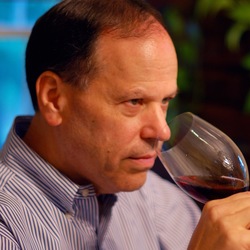
History of Chapoutier family dates back to the early 19th century when current owner Michel Chapoutier’s great-, great-, great-grandfather Marius purchased estate & famous l’Hermitage vineyards. Medium Ruby with aromas of rich red/black fruits and spice. On the palate raspberry, cherry & black currant flavors with notes of oak. Firm tannins, well balanced, long finish, ending with fruit, spice and cedar. Very nice! Tasting Sample. Will age nicely! — 5 years ago
Robert Mondavi Winery
Reserve Napa Valley Cabernet Sauvignon 1985
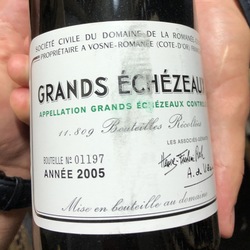
A perfect Mondavi ‘85. Fresh as a daisy. Continued to improve and elicit more and more fruit expression in addition to its complex tertiary elements over the course of the night. Not my typical wine of choice, but when you have an old school Napa cab like this, well stored and in pristine condition, it is a reminder why they hold such a special place in the wine world’s history. — 5 years ago

Sandlands
Amador County Mission 2018
My first experience with a wine made from the Mission grape which was brought to California from Spain in the mid/late 19th century. The vineyard that Sandlands sources its fruit from is the Deaver Ranch where the vines were planted in 1854 and thought to be some of the oldest vines in California! It pours a very light ruby color, almost like a dark rosé really. On the nose, it’s not terribly expressive but there is a light touch of fig and some red fruits; raspberries and cherries. On the palate, this is a very juicy wine with raspberries, cherries and rhubarb. There didn’t seem to be a whole lot of structure with this bottle showing modest tannin and medium-low acid. Finish is clean and satisfying. One feels as though they are drinking history with a wine like this; certainly fun to try. Only two barrels were produced in 2018. — 6 years ago
Klein Constantia
Vin de Constance Natural Sweet Muscat à Petits Grains 2015
Sorry, short notes on this one. I had to get to Cape Point Vineyards.
This might be their most famous wine. Here is some history of this wine over the centuries. Napoleon Bonaparte had as much as 1,126 liters (297 gallons) of Constantia wine shipped in wooden casks each year to Longwood House, his home in exile on St Helena from 1815 until his death in 1821. The Count de las Cases reported that, on his deathbed, Napoleon refused everything offered to him but a glass of Constantia wine.
In Sense and Sensibility, Jane Austen's character Mrs Jennings recommends a little Constantia for "its healing powers on a disappointed heart"
In Charles Dickens' last (and unfinished) novel, The Mystery of Edwin Drood, Constantia wine is served to the reverend Septimus by his mother.
My quick notes. They make several passes through the vineyard waiting for the perfect raisinated grapes. The body is, thick, sticky and sweet. Marmalade, both peach types, apricot, nut skins, dried pineapple, lots of residual sugar, great acidity and a rich, sweet, well balanced polished finish. Not entirely different than Sauternes. Thick D’Yquem of South Africa.
Photos of; the Klien Constantia Estate vines with the mountains painting the background, the door to Duggies Dungeon, horizontal stainless settling tanks and the fruit of this wine in its raisinated picking state. — 8 years ago

Château Pichon Longueville Comtesse de Lalande
Pauillac Red Bordeaux Blend 2005
I remember when the 2005 Pichon Lalande was reviewed by RP, 89. I saw that & said, you would have to get in the way of the 2005 Bordeaux vintage to be that sad. I still bought 6 at a bargain basement price. A very good idea post 20 yrs+. Both Pichon’s don’t have a modern day history of getting in the way of a good vintage.
I also bought this one. 18 yrs in bottle and still acending. This will hold 5 more yrs and will last another 10 yrs properly stored.
I have visited Bordeaux 11 times. This chateau visually is still my favorite. It was showing a picture of this chateau to Sofia that launched our first visit. Sofia loved it and we have stared at it multiple times on every visit.
It was in our visit in 2007, I stood in the estate vineyard, looked & tasted their soils. After doing so, I said, “I get it.” I understood everything about what I was tasting in Left Bank Bordeaux’s early in my wine journey.
Sofia and I had dinner w/ Christian Moueix not long after the 2005 vintage was hyped/released. She asked him, when did you know you had something special?” He said, “as soon as I tasted the fruit at harvest.”
Tonight, it shows that it is a close relative, a sibling to Pichon Longueville. Cork, perfect.
The nose shows; classic left bank traits. Ripe, dark, brooding fruits, bright, mid berries, red cola, leather, tobacco, sandalwood, leather, led pencil, dark rich earth, limestone, dry river stone, hint of mushrooms, dark, red, fresh & withering florals.
The fruits on the palate show everything outstanding from the 2005 growing season. Ripe, juicy, brilliant; dark currants, blackberries, black raspberries, black plum skin, black cherries, baked/poached strawberries & some hovering raspberries. Dark chocolate bar to pudding, red cola, anise, dark spices w/ palate heat, dark, rich earth w/ dry leaves, pronounced graphite, dry tobacco, leather, limestone, dry twig, dry river stone, moist clays, moist herbs, cedar to sandalwood, withering & dry, dark flowers, red roses, some lavender & violets, beautiful rainfall acidity, excellent; balance, tension, structure, length w/ an elegant finish that lasts minutes and lands on spice & earth.
13.4 ABV. Nice.
#TheTwoHourRibcap
This held up vacuumed sealed the same night, refrigerated & enjoyed exactly a week later. — 10 months ago
Domaine du Pegau
Cuvée Réservé Châteauneuf-du-Pape Red Rhone Blend 1990
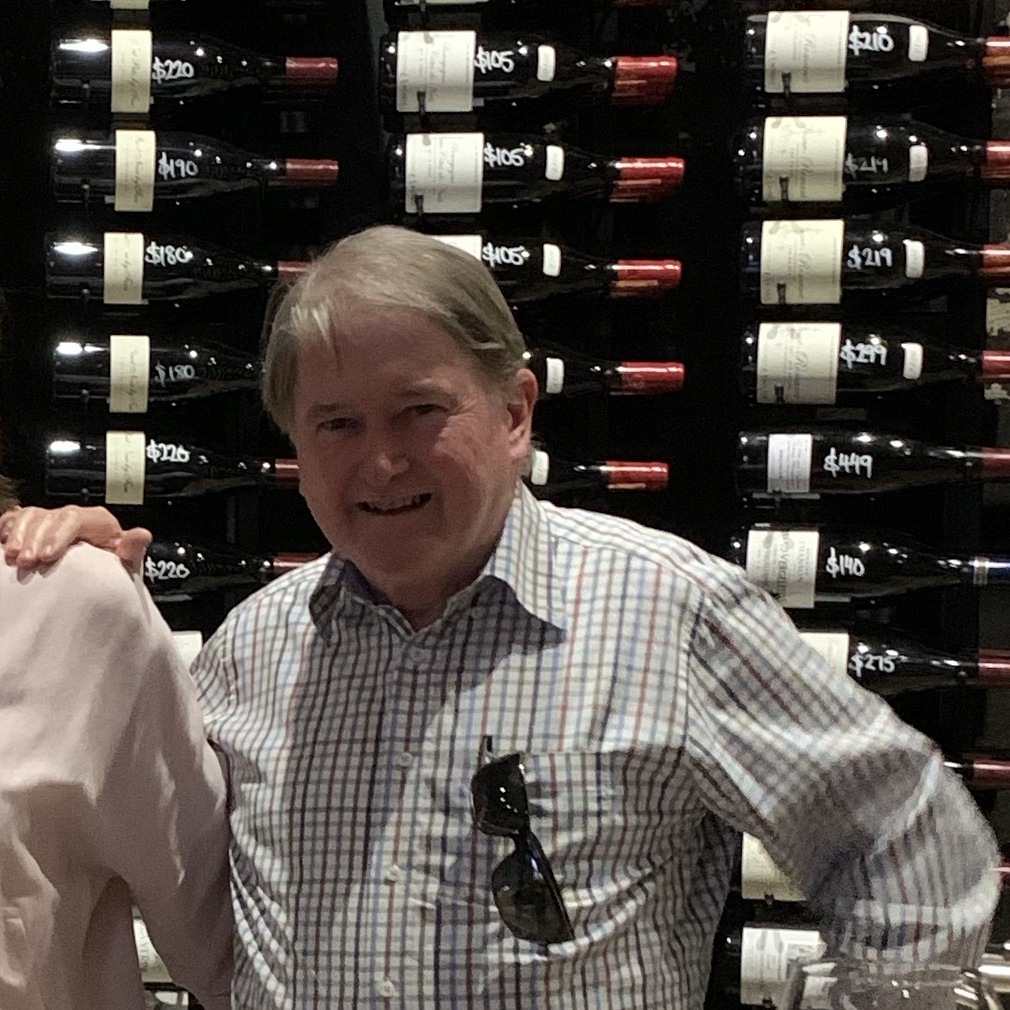
History in a bottle. This was Laurence’s first vintage that completely bottled and sold out and oh, what an effort it is! The fruit is so well preserved whilst the abundance of secondary characteristics well on display. Structurally sound still and very much alive. One of the oldest CdP’s I’ve had the pleasure of experiencing and just proves how special these wines really are. — 4 years ago
Ridge Vineyards
Benito Dusi Ranch Paso Robles Zinfandel 2018
History begins in 1885, when Osea Perrone, a doctor in San Francisco's Italian community, bought 180 acres near the top of Monte Bello Ridge in the Santa Cruz Mountains. This is 100% Zin! Dark Ruby with aromas of berry fruits, floral and spice! On the palate flavors of blackberry and cherry with peppery floral herb spice integrated with fine soft tannins, lively acidity. Medium+ finish ending with juicy fruit and spice. Nice! — 5 years ago
Château La Tour Carnet
Haut-Médoc Red Bordeaux Blend 2003

18 years old and also 18 years young. There is a history here, with a future ahead. This wine came a long way baby! Fruit of the forest, licorice, incredibly rich and bursting with life. Voluptuous and warm, coffee, butterscotch, powdery and integrated tannin. It’s shining. Cheers Floor. Here’s to adulthood! — 5 years ago


Château Cantemerle
Haut-Médoc Red Bordeaux Blend 2008
Confrérie de la Chaîne Des Rôtisseurs, Bailliage d'Albany; 3 November 2019 at the Albany Institute of History & Art, Albany, NY
Fifth Course
Beef
Sous Vide Braised Short Rib, Corn Milk, Pod Peas, Smoked Potato Angolotti, Braising Nectar
(Perfect pairing, bottle was still youthful but in a prime, enjoyable drinking window!) — 7 years ago
Hobel Wines
The Figure Napa Valley Cabernet Sauvignon 2014
The owners of Hobel Wines came to town and put on a nice tasting, while also detailing their history. Very nice people and wines. They make two wines, both Cabernets from Calistoga. TRB is the winemaker.
En mag. Nearly identical to the ‘16, but the upfront sweet/candied red fruit has shed a touch of its “baby fat”, and balances better with the black fruit and mint. — 8 years ago
Château Calon-Ségur
Saint-Estèphe Red Bordeaux Blend 1996
On the nose, a touch of barnyard. Sweet & sour dark cherries, blackberries, black raspberries, baked strawberries and hues of blue fruits. Dry crushed rocks, dry stones, rich black turned, soft leather, cedar, underbrush, tobacco, light vanilla & clove, medium spice, limestone, fresh & withering dark red floral bouquet.
The body is just full. The tannins are soft, rounded, chewy & sticky and still have some teeth. The wine elegantly guides smooth over the palate...very little that pushes back. It’s still youthful but not as youthful as my expectation. Sweet & sour dark cherries, blackberries, black raspberries, baked strawberries and hues of blue fruits. Dry crushed rocks, dry stones, rich black turned, soft leather, cedar, underbrush, tobacco, some dry herbal notes, sweet tarry notes, light vanilla & clove, medium spice, powdery limestone, loamy clay & top soil, graphite, dark spice with lifting heat, fresh & withering dark red floral bouquet and haunting violets. The acidity is near perfect. The structure, tension, length are in a very place but, will still improve for another 15+ years. The long, finish is ripe, round, balanced and lasts minutes.
Photos of, the Chateau, Technical Director Vincent Millet, beautiful stainless steel tank room and their new barrel room.
Producer notes & history...historic records show that Calon Segur was in existence as far back as 1147, when it was owned by Monseigneur de Calon. He was an important Bishop in the community. This makes Chateau Calon Segur one of the very oldest properties in Saint Estephe. Eventually, the property came to be owned by Nicolas Alexandre de Segur. Hence where part of the name of the Chateau comes.
After passing through generations, the estate became the property of the famous Marquis de Segur. de Segur is an important figure in Bordeaux history, not only for his ownership of numerous top Bordeaux estates in that day but, he also owned Lafite and Latour. de Segur is credited with uttering the words that spawned the idea behind the heart shaped logo of Calon Segur. The story is that de Segur is quoted as saying: “I make my wine at Lafite and Latour, but my heart is in Calon.” This famous saying lives on the label of Chateau Calon Segur, where the drawing of a heart is prominently featured on the bottle.
Chateau Calon Segur was one of the original three Bordeaux vineyards in Saint Estephe. In 1825 Chateau Montrose was a forest without a single vine belonging to the massive Calon Segur estate. In fact, Chateau Phelan Segur was also once part of the vast Segur estate. The holdings of the Segur family were so large, they included what would later became Chateau Lafite Rothschild, Chateau Latour and Chateau Mouton Rothschild!
The more modern era by European standards began in 1894 when its Left Bank vineyards were purchased by Georges Gasqueton and Charles Hanappier. Hanappier was a large negociant at the time. The Gasqueton family managed the estate until 2012. Madame Gasqueton ran the estate until she passed away at the age of 87 in late September, 2011.
In July of 2012, Chateau Calon Segur was sold for 170 million Euros or 215 million US dollars. The buyer was a French Insurance Company, Suravenir Insurance. Jean-Pierre Moueix, the owner of Petrus and the massive negociant company Duclot also took a minority stake in Chateau Calon Segur.
Since taking over Calon Segur, they started renovating the property with the focus on the wine making facilities. They followed a trend to vinify on a parcel by parcel basis. The estate replaced their older vats with new stainless steel tanks that vary in size and number to match the size of the various vineyard parcels.
The new tanks accompany a completely new vat room as well with everything moving completely by gravity. The new tasting room was remodeled as well. The renovations were completed in 2016.
Their cellars also needed work. Immediately after closing, the new owners began an extensive replanting of the Calon Segur vineyard. There were a number of reasons they chose to do this. They needed to increase the level of vine density and add more Cabernet Sauvignon.
The extensive renovation of Chateau Calon Segur cost somewhere north of 20 Million Euros. Other changes, the new owners took full control and brought in Vincent Millet as the Technical Director.
The 55 hectares of Calon Segur are located just north of the small town of St. Estephe and are planted to 53% Cabernet Sauvignon, 38% Merlot, 7% Cabernet Franc and 2% Petit Verdot.
Chateau Calon Segur is one of the few walled in vineyards in the Left Bank. Calon Segur is also known as being the northern most Classified Growth in Medoc.
The terroir of Calon Segur is a blend of gravel, rocks, clay, sand and limestone soils on the surface with gravel that can be as deep as 5 meters. Underneath, you find marl, clay and limestone.
On average, the vines are 25 years of age. However, they have older vines that range in age from 45-60 years of age.
The vineyard of Chateau Calon Segur remains almost exactly the same as it did at the time of the 1855 Classification.
Since the remodel was completed, fermentation takes place in 70 conical shaped, stainless steel tanks that range in size from 25 hectoliters to 120 hectoliters. Vintages are now aged in 90% to 100% new, French oak barrels for up to 20 months.
Production of Chateau Calon Segur is around 20,000 cases per year. They also make a second wine, which was originally named Marquis de Calon. Now, the second wine is sold under the name of Le Marquis de Calon Segur.
There is also a third wine, which is sold under two names, La Chapelle de Calon, and St. Estephe de Calon Segur, which is produced from vines that mostly come from a specific plot with more limestone. — 8 years ago

Paul T, Missing My Beautiful Wife 24/7
Oh my 👍🏻 😩I🚑💉🆘Paul T, Missing My Beautiful Wife 24/7
No offense @Sofia Jalilie , you know I like to mess with David 😁Langmeil
The Freedom Barossa Valley Shiraz 2021

Phenomenal wine even before you realize this is crafted from the oldest Syrah/Shiraz vineyard in the world. Intense in flavor, in spice and in vibrancy. A complex wine that is trying to tell you the 180 year history that is has experienced. Planted less than 20 years after Napoleon died. Want it hear the story behind this wine? Go to our Spoken Wines YouTube Channel. Here is the link to the playlist of our featured wineries from around the world, including Langmeil: https://youtube.com/playlist?list=PLpofkX3h8KKYBJGn71pXn-63RR9dIn43x&si=3a-t115KrKZdaQQW — 10 months ago


Château Latour
Premier Grand Cru Classé Pauillac Red Bordeaux Blend 1945
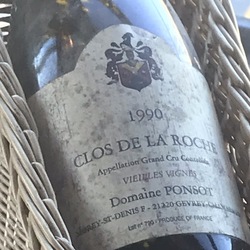
Dark scarlet. Sweet nose. Has something exotic going on in the mouth, almost as if it was fortified. Notes of red fruit, earth, stones and some funk. Great to drink history. — 3 years ago

Stony Hill
Napa Valley Chardonnay 2012



Château Grand-Puy-Lacoste
Pauillac Red Bordeaux Blend 2017
Family history dates back to the 16th century. Name of Grand-Puy, mentioned in documents from Middle Ages, comes from ancient term "puy" means "hillock, small height". Since 16th century, property was passed from generation to generation, until 1920s when the Borie's bought the property. 80% Cab Sauv, 80% new oak, aromas of ripe red fruits with floral spice. Palate shows blackberry and cherry fruit, well balanced, nice oak integration, chewy tannins ending with spicy mineral tones. — 5 years ago
Alvear
Solera 1927 Montilla-Moriles Pedro Ximénez 1927
Incredibly rich & lush with golden raisins, dried figs, toffee but also some golden yunnan tea and a splash of iodine.
Rich and coating on the palate with toffee and fruity molasses at the front, yet the zingy acidity cutes through and balances everything beautifully. Finish that lasts forever... with candied Leone peel, a fresh salty tang, a pinch of exotic spice.
This is incredible. Liquid history. — 5 years ago
Château Clos L'Eglise
Pomerol Merlot - Cabernet Franc Blend 2009
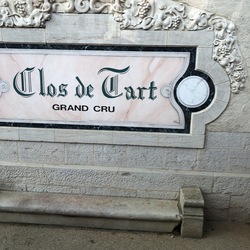
I have a history with this wine as it was an early love for me circa 1999 off a wine list at Aureole (the original Aureole). In haven’t had it in almost as many years and so a I grabbed a few bottles of 09. I don’t drink a lot of Bordeaux anymore but this seems to display more earth and less fruity to me than I expected. Bold alcohol content. Still showing some sharp edges. I like this wine but my 25 year old self had a very different palate. — 7 years ago

M. Chapoutier
Barbe Rac Châteauneuf-du-Pape Red Rhone Blend 2014
History of Chapoutier family dates back to early 19th century when current owner Michel Chapoutier’s great-, great-, great-grandfather Marius purchased estate & famous l’Hermitage vineyards. Deep Purple (with a little smoke on the water), 100% Grenache with aromas of dark fruit and complex exotic spice. Plum, berry & current flavors with nutty tobacco develops into sweet licorice. Tannins a bit grippy but will soften, lingering, balance ending with fruit and spice. Nice!
— 8 years ago
Jake Hajer
Solera style multi-vintage cab. Blending years wines from the early 90s. Needed air for sure to reveal slightly tired but layered, complex dark red fruit. Very nice. — 10 months ago